2026 Top Aluminium Entrance Door Types for Global Buyers

Time:2026-10-19 Author:Mason
0%

In 2026, global buyers are looking beyond appearance when choosing an Aluminium Entrance Door. They want reliable performance, clean design, and practical long-term value. Common options include hinged, pivot, sliding, glazed, thermally broken, and reinforced entrance systems. Each type suits different buildings, climates, and security expectations. A coastal villa may need corrosion-resistant finishes, while a cold-region home may require advanced thermal insulation. Large glass panels can brighten an entrance, but they also demand careful structural and safety planning. Small details matter.

Experienced architects, fabricators, and installers usually assess more than catalog photographs. They review frame depth, thermal breaks, drainage paths, locking hardware, glass specification, and installation tolerances. Independent test reports can confirm air permeability, water tightness, wind resistance, and security performance. Local building requirements still vary. Buyers should verify documents with qualified professionals before placing an international order. A beautiful door can fail when the threshold is poorly sealed. That lesson matters.

This guide compares leading Aluminium Entrance Door types for global buyers in 2026. It considers design flexibility, energy performance, maintenance, customization, delivery risks, and total ownership cost. Supplier reputation also deserves attention. Check factory experience, quality-control records, warranty terms, replacement-part access, and after-sales communication. Numbers can mislead. A low purchase price may hide complex installation or expensive hardware replacement. Likewise, premium finishes are not automatically better for every project. The most dependable choice balances tested performance, regional suitability, refined appearance, and realistic budget limits. Some recommendations may need refinement as technologies and standards change. That is part of making a responsible buying decision.
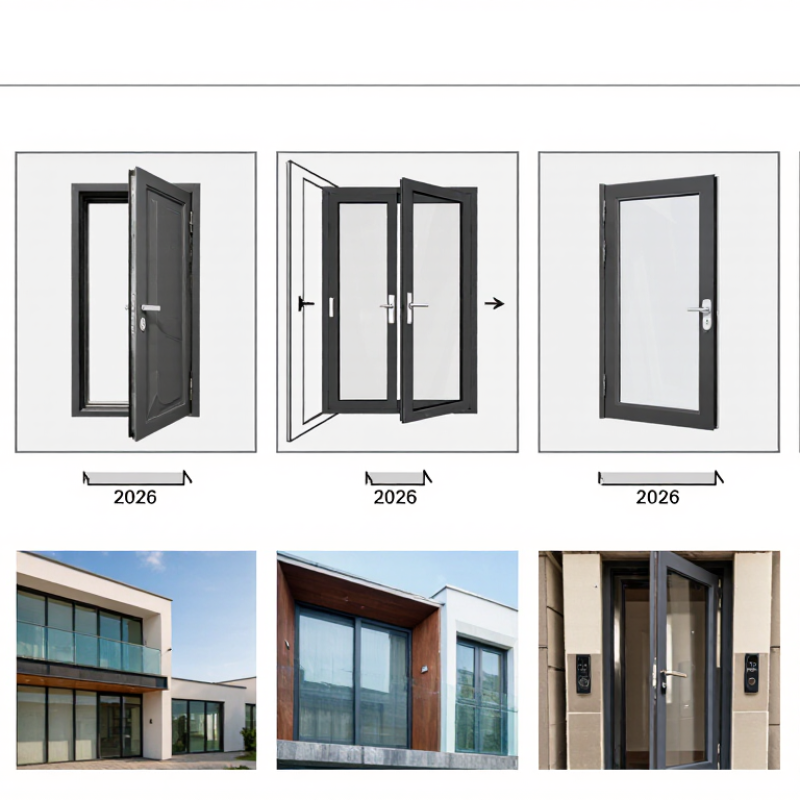
2026 Top Aluminium Entrance Door Types for Global Buyers

Aluminium Entrance Door Types and Their Core Design Differences

Aluminium entrance doors differ mainly in movement, frame depth, and thermal strategy. Hinged doors use side hinges and a compression seal. They suit frequent access and usually provide simpler maintenance. Pivot doors rotate around concealed floor and head pivots. Their wider leaves create a dramatic entry, but alignment becomes more demanding. Sliding doors move along tracks, saving swing space. However, their meeting stiles and track drainage need careful detailing.

Thermally broken doors include a polyamide separator between interior and exterior aluminium. This interrupts heat transfer through the frame. Non-thermal systems cost less, but they can feel cold indoors.

The International Aluminium Institute reports that recycled aluminium can require about 95% less energy than primary aluminium production. That figure supports recycled-content specifications, although certification and alloy quality still require checking. Glazing changes performance too. Low-emissivity glass, warm-edge spacers, and insulated panels reduce heat loss through large door leaves.

Design selection should follow climate, exposure, and traffic levels. A coastal entrance needs durable finishes, stainless hardware, and dependable drainage. A high-traffic building needs tested hinges, replaceable seals, and a robust threshold. The 2024 International Energy Agency report continues to identify building efficiency as a major route for reducing energy demand.

Yet an attractive thermal break cannot repair poor installation. I have seen carefully specified doors underperform because the sill lacked slope or the perimeter seal was uneven. That weakness deserves more attention. Door testing should include air leakage, water penetration, wind resistance, and operation cycles under recognized regional standards.

Key Features and Performance Standards for 2026 Models

For 2026, aluminium entrance doors must balance appearance with measurable performance.

Slim frames can create a clean facade, but they should not weaken insulation or security. Thermal-break systems reduce heat transfer through the frame. Buyers should check the complete door U-value, not only the glass rating. This distinction is often missed.

A reliable model should include documented air permeability, watertightness, and wind-load results. European projects may reference EN 12207, EN 12208, and EN 12210.

Security performance can be assessed under EN 1627, depending on the required resistance class. Other regions may use different testing systems. Ask for comparable reports.

Do not rely on marketing phrases.

Small details matter.

Multi-point locks, reinforced hinge zones, laminated safety glass, and adjustable seals support long-term use. Powder coating should resist ultraviolet exposure, humidity, and coastal salt where necessary.

Drainage paths must remain clear after installation. Poor fitting can reduce the performance of an excellent door.

That is a practical weakness worth remembering.

Global buyers should also examine threshold design, accessibility needs, acoustic ratings, and replacement-part availability. A low threshold may improve access, but it can demand better water management.

Certification is useful, yet it does not replace site inspection. Request installation guidance, maintenance intervals, and full test conditions before approval.

Performance claims without test scope are incomplete.

How Climate, Security, and Building Codes Shape Door Selection

2026 Top Aluminium Entrance Door Types for Global Buyers

Climate, Security, and Building Codes Shape Door Selection

Climate should guide the frame before appearance. The UNEP Global Status Report for Buildings and Construction 2023 links buildings to 34% of global energy demand and 37% of energy-related emissions. Thermally broken aluminium doors reduce heat transfer between indoor and outdoor surfaces. They suit cold regions, while ventilated or shaded systems help in hot climates. Coastal buyers should request corrosion-resistant finishes and stainless-steel hardware. Salt air exposes weak specifications quickly.

Security requirements vary by country and building type. Solid-panel doors offer stronger privacy, while laminated or reinforced glazing supports daylight without sacrificing protection. Buyers should check tested resistance classes under EN 1627, where applicable, and confirm local equivalents. Building codes may also control U-values, threshold accessibility, wind loads, emergency escape, and fire performance. A door can pass one requirement and fail another. That detail is often missed.

Tips: Ask for whole-door test results, not frame claims alone. Confirm installation conditions, drainage paths, and warranty limits. Request climate-specific samples, especially after thermal cycling or salt-spray testing. A lower-cost door may look efficient on paper, but poor installation can erase the benefit. Local code review remains essential; assumptions travel badly across borders.

2026 Top Aluminium Entrance Door Types for Global Buyers — How Climate, Security, and Building Codes Shape Door Selection
Aluminium Entrance Door Type Best-Fit Climate or Market Typical Thermal Performance Weather and Durability Considerations Security Characteristics Building-Code and Specification Priorities Recommended Buyer Profile
Thermally Broken Insulated Panel Door Cold climates, mixed climates, and energy-efficient residential projects Low-conductivity polyamide thermal breaks and insulated cores can support whole-door U-values commonly around 1.0–1.8 W/m²·K, depending on size, glazing, panel, and threshold design. Good resistance to condensation when the frame, panel, glass, and threshold are correctly detailed. Specify durable powder coating or anodized finishing for freeze-thaw and seasonal exposure. Multi-point locking, reinforced hinge zones, laminated safety glass, and anti-lift hardware can provide a strong residential security package. Check local maximum U-value requirements, air leakage, water penetration, safety glazing, threshold accessibility, and emergency-exit rules where applicable. Homebuilders, apartment developers, and renovation projects in Europe, North America, northern Asia, and high-altitude regions.
High-Performance Glazed Aluminium Door Modern homes, offices, hospitality projects, and mild-to-moderate climates Performance depends heavily on low-emissivity double or triple glazing, warm-edge spacers, frame depth, and glass-to-frame ratio. Centre-of-glass values are not the same as whole-door values. Large glazed areas require careful drainage, gasket selection, solar-control glass, and protection from thermal stress. External shading may reduce overheating in sunny regions. Use laminated or toughened safety glass, restricted opening hardware, concealed or surface-mounted multi-point locks, and impact-rated assemblies where required. Review daylight, solar-gain, safety-glazing, accessibility, wind-load, and thermal-energy provisions. Product test results should cover the complete door assembly. Design-led projects that prioritize daylight, visual openness, and architectural appearance while maintaining documented performance.
Hurricane- and High-Wind-Rated Aluminium Door Coastal zones, tropical cyclone regions, and exposed high-wind locations Thermal efficiency varies by system; structural reinforcement and impact-resistant glazing often add weight and may require more robust frames and hardware. Specify tested resistance to wind pressure, wind-borne debris impact, water penetration, and air infiltration. Marine-grade finishes and stainless-steel components help reduce corrosion risk. Multi-point locks, reinforced strike plates, impact-resistant laminated glazing, and continuous anchorage improve resistance to forced entry and storm pressure. Verify the applicable regional wind-borne-debris and pressure requirements. Testing must reflect the complete size, configuration, glass type, and installation method. Buyers in hurricane-prone coastal areas, including parts of the Caribbean, the Gulf Coast, East Asia, and Oceania.
Marine-Grade Coastal Aluminium Door Seaside residences, waterfront hotels, ports, islands, and high-salt environments Available with thermal breaks and insulated panels; thermal performance should be evaluated separately from corrosion performance. Use suitable powder coating or anodizing, properly pre-treated aluminium, corrosion-resistant fasteners, sealed drainage paths, and regular cleaning to remove salt deposits. Corrosion-resistant multi-point hardware and laminated glass help maintain security over a longer service life in aggressive environments. Confirm coastal exposure classification, coating quality, water drainage, fastener compatibility, and local wind-load requirements. Avoid dissimilar-metal contact without appropriate isolation. Projects where salt spray, humidity, and long-term finish retention are more critical than minimum initial cost.
Hot-Climate Solar-Control Door Desert, subtropical, Mediterranean, and equatorial regions Thermal breaks, insulated panels, low-solar-gain glazing, and airtight weather seals reduce heat transfer. Solar heat gain depends on glazing properties and orientation, not frame material alone. Select finishes with suitable solar-reflectance characteristics and specify drainage and gaskets designed for high ultraviolet exposure. External shading is often highly effective. Multi-point locking and laminated glazing are recommended, especially for ground-floor entrances and properties in isolated locations. Check cooling-load, solar-gain, air-leakage, accessibility, and safety-glazing requirements. Dark finishes may increase surface temperatures and thermal movement. Buyers seeking lower cooling demand, reduced glare, and stable interior temperatures in sunny regions.
Acoustic-Rated Aluminium Entrance Door Urban apartments, hotels, offices, transport-adjacent buildings, and mixed-use developments Acoustic performance is commonly specified by tested sound-reduction values rather than thermal U-value. Solid panels, compression seals, and laminated acoustic glass generally improve sound control. Perimeter seals and automatic drop seals must remain correctly adjusted. Poor threshold detailing can significantly reduce real-world acoustic performance. Solid cores, reinforced frames, multi-point locks, and laminated glass can provide both improved sound control and resistance to forced entry. Confirm the required weighted sound-reduction rating, fire and smoke provisions where relevant, accessibility clearances, and complete-assembly test evidence. Projects near roads, railways, airports, nightlife districts, or dense urban areas where occupant comfort is a priority.
Fire- and Smoke-Control Aluminium Entrance Assembly Commercial buildings, apartment corridors, plant rooms, and regulated public facilities Thermal performance is secondary to tested fire-resistance and smoke-control behavior. The door, frame, glazing, seals, closer, and hardware must be approved as a compatible assembly. Use only tested and certified components. Intumescent seals, fire-rated glazing, self-closing devices, and protected hardware require correct installation and maintenance. Controlled access, panic hardware, fail-safe or fail-secure functions, and door closers should be selected according to the building’s evacuation strategy. Fire ratings, smoke leakage, egress width, panic-exit requirements, accessibility, and inspection procedures vary by jurisdiction and occupancy type. Developers and facility managers working under strict fire-safety and life-safety regulations.
Accessible Low-Threshold Aluminium Door Public buildings, healthcare, education, senior living, and inclusive residential projects Low thresholds can be combined with thermally broken frames, insulated panels, and weather seals, but drainage and water resistance require careful detailing. Use slip-resistant, robust thresholds with controlled drainage. Ensure the door remains easy to operate after exposure to dirt, moisture, and temperature changes. Automatic operators, access-control integration, safety sensors, and monitored locking can improve both accessibility and controlled entry. Check clear opening width, threshold height, opening force, maneuvering space, visual contrast, accessible hardware, and emergency-release provisions. Projects where universal access, code compliance, and ease of operation are essential selection criteria.
Security-Focused Solid Aluminium Panel Door Urban residential entrances, service entrances, villas, and low-visibility external openings Insulated panel construction can provide moderate-to-good thermal performance, although panel thickness, core material, edge construction, and threshold design are decisive. Solid panels reduce glass-related heat gain and privacy concerns. Specify sealed edges, durable finishes, and corrosion-resistant hardware for external exposure. Best suited to reinforced multi-point locking, security cylinders, hinge-side protection, laminated vision panels where needed, and security-rated hardware. Review forced-entry classification, door-cycle testing, safety glazing for any vision panel, accessibility, and local emergency-egress provisions. Buyers prioritizing privacy, physical security, and reduced glazing over maximum daylight.
Smart Access-Control Aluminium Door Office buildings, serviced apartments, gated residences, and multi-tenant developments Thermal and weather performance should be selected independently from electronic access features. Cable routing and lock pockets must not compromise seals or structural integrity. Protect electronic components from water ingress, condensation, ultraviolet exposure, and temperature extremes. Provide manual override and service access. Can integrate electronic cylinders, keypad or credential readers, video intercoms, door-position sensors, and audit trails. Cybersecurity and power-failure behavior are part of the specification. Confirm accessibility, emergency egress, fire-door compatibility, electrical safety, data protection, and fail-safe or fail-secure requirements. Buildings requiring controlled permissions, remote management, visitor monitoring, or integration with wider security systems.
Specification note: Performance values are indicative selection ranges, not universal guarantees. Final compliance depends on the complete tested door assembly, including frame, panel, glazing, seals, hardware, threshold, anchorage, dimensions, and installation. Buyers should verify current local requirements for thermal transmittance, air leakage, water penetration, wind pressure, fire safety, accessibility, impact resistance, and forced-entry performance before placing an order.

Comparing Thermal Break, Non-Thermal, and Smart Aluminium Doors

In 2026, aluminium entrance doors are moving beyond simple style choices. Thermal break doors use an insulating polyamide barrier between interior and exterior aluminium sections. This reduces heat transfer and helps limit condensation around the frame. They suit cold regions, air-conditioned buildings, and homes with large glazed panels. Non-thermal doors have a continuous aluminium profile. They usually cost less and work well in mild, dry climates. However, they may feel cold indoors during winter. Small gaps can become noticeable near the threshold.

Smart aluminium doors add electronic access to either construction. Fingerprint readers, PIN pads, mobile control, and temporary visitor codes can improve daily convenience. Yet smart features do not replace a strong frame, reliable hinges, or correct installation. Battery failure remains a practical concern. A mechanical override is essential. Buyers should also confirm data protection, local electrical requirements, and after-sales support before ordering.

From project inspections, I have found that poor sealing causes more complaints than the aluminium type itself. Check the weather gasket, drainage channels, lock alignment, and sill design. Thermal performance also depends on glazing and installation quality. A premium frame cannot correct careless fitting. I once underestimated afternoon sun on a dark aluminium door; the surface became uncomfortably hot. Finish, orientation, climate, maintenance access, and security habits all deserve careful review. The perfect door does not exist. The right comparison is more useful.

A Step-by-Step Guide for Global Buyers to Choose the Right Type

2026 Top Aluminium Entrance Door Types for Global Buyers

Choosing an aluminium entrance door starts with the building, not the catalogue. The International Energy Agency reports that buildings consumed about 30% of global final energy in 2022. Therefore, check the local climate first. In cold regions, choose a thermally broken hinged door with insulated glazing. In warm climates, consider a sliding or folding system with solar-control glass. Windy coastal sites need corrosion-resistant finishes and tested locking hardware.

Measure the opening carefully. Then review the traffic pattern. A hinged door suits narrow entrances and frequent daily use. A sliding door saves floor space but needs a clean bottom track. Pivot doors create a wide opening, although their hardware demands accurate installation. Ask suppliers for U-value, air-leakage, water-tightness, and wind-load test results. ISO 10077-1 provides a recognized method for calculating thermal transmittance. Do not trust appearance alone.

Check the frame, glass, seals, threshold, and drainage as one system. The U.S. Department of Energy notes that uncontrolled air leakage can significantly increase heating and cooling demand. That detail is easy to overlook. Also request material documentation. The International Aluminium Institute states that recycled aluminium requires roughly 5% of the energy used for primary aluminium production. Still, recycled content does not guarantee a better door. I would compare test evidence, warranty terms, replacement parts, and installer experience. A perfect specification can fail on site.

FAQS

What should buyers check when comparing aluminium entrance doors in 2026?

Check the complete door U-value, not only the glass rating. Request air, water, wind, and security test reports. Marketing phrases are not enough.

What is a thermal-break aluminium door?

It contains an insulating barrier between the inner and outer aluminium sections. This reduces heat transfer and condensation. It suits cold climates and air-conditioned buildings.

When can a non-thermal door be suitable?

Non-thermal doors usually cost less. They can work well in mild, dry climates. In winter, the frame may feel cold. Small threshold gaps can become noticeable.

Do smart access features improve door security?

Electronic access can add convenience through codes, fingerprints, or mobile control. It does not replace strong hinges, a solid frame, or careful installation. Always include a mechanical override.

Which physical details support long-term performance?

Look for multi-point locks, reinforced hinge areas, laminated safety glass, and adjustable seals. Clear drainage paths also matter. Tiny blockages can create larger problems.

How does installation affect an aluminium entrance door?

Poor fitting can reduce the performance of an excellent door. Inspect the gasket, drainage channels, lock alignment, sill, and threshold. A premium frame cannot fix careless installation.

What should buyers consider for access and weather protection?

A low threshold can improve accessibility. However, it requires effective water management. Review local rain exposure, drainage design, and site conditions before approval.

What should be checked before ordering a dark aluminium door?

Consider sunlight, orientation, climate, finish durability, and maintenance access. I once underestimated afternoon sun. The surface became uncomfortably hot. That mistake still deserves attention.

Are certifications enough to approve a door?

No. Certification helps, but it does not replace site inspection. Ask for full test conditions, installation guidance, maintenance intervals, and replacement-part availability. The perfect door does not exist.

Conclusion

This guide to 2026 Aluminium Entrance Door types explains the main design differences, including hinged, sliding, pivot, folding, glazed, and solid-panel configurations. It examines how frame structure, glass selection, hardware, insulation, weather resistance, and access control affect daily performance. Key standards for newer models include thermal efficiency, air and water tightness, wind-load resistance, acoustic comfort, durability, and reliable security. The guide also compares thermal-break, non-thermal, and smart aluminium doors, helping buyers understand where each option is most suitable.

Climate, building orientation, local codes, energy targets, and security expectations all influence the best choice. Buyers should assess the project location, opening size, exposure to heat or cold, maintenance needs, budget, and desired functions before selecting a door. By following a step-by-step evaluation process, global buyers can choose an Aluminium Entrance Door that balances appearance, comfort, safety, energy performance, and long-term value.

Mason

Mason

Mason is a seasoned marketing professional with a deep expertise in the company's offerings and a passion for driving brand awareness. With a strong background in digital marketing strategies, he has an innate ability to connect with diverse audiences and effectively communicate product benefits.......