China Best Aluminum Exterior Door Manufacturer?

Time:2026-11-18 Author:Mason
0%

What makes a China-based Aluminum Exterior Door manufacturer a strong choice? The answer is rarely a polished showroom alone. It lies in the frame corners, drainage paths, weather seals, and hardware you can inspect. A door should open smoothly, close without a hard shove, and keep its alignment after repeated use. Small details matter.

Architect Ludwig Mies van der Rohe is commonly associated with the line, “God is in the details.” It is a useful reminder when comparing door suppliers, though it was not a comment about aluminum doors specifically. Look closely at thermal breaks, gasket continuity, surface finishing, and how the manufacturer handles custom dimensions. Ask for product specifications, test documentation, factory quality procedures, and references for comparable projects. Clear answers are more useful than broad claims about being the best.

The right manufacturer also asks about the building’s climate, exposure, opening size, and daily traffic. A coastal entrance, for example, needs different finish considerations from a sheltered interior-facing doorway. Request a sample corner or a working hardware demonstration. Feel the handle. Check the seal. Listen to the latch.

Still, no checklist is perfect. Samples may not show how a finished door performs after years of use, and a low price can hide costly compromises. Compare the same specifications across suppliers, confirm what is included, and discuss installation support before ordering. The best choice is the one that fits the project, communicates clearly, and can support its claims with evidence.
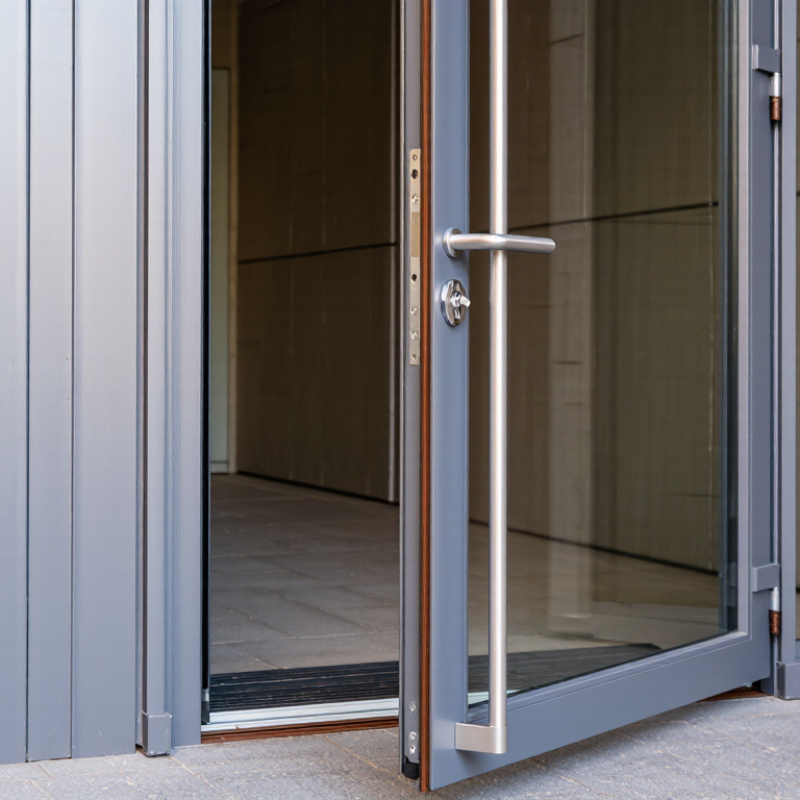
China Best Aluminum Exterior Door Manufacturer?

What Defines a Leading Aluminum Exterior Door Manufacturer in China?

China Best Aluminum Exterior Door Manufacturer?
What Defines a Leading Aluminum Exterior Door Manufacturer in China?

A leading manufacturer does more than supply attractive door panels. It asks about the opening size, wall construction, wind exposure, and daily use before recommending a design. These details affect frame depth, glass choice, threshold height, and hardware. A careful site review can prevent a door from rubbing after installation. Small measurements matter.

Consistent production is another key sign. Check whether the manufacturer controls profile cutting, corner assembly, drainage paths, and seal placement. Ask how samples and finished doors are inspected, and whether quality records can be shared. A polished catalogue proves little. I would also look for clear guidance on installation and replacement parts. One weakness can remain: even a well-made door may perform poorly if the opening is measured incorrectly.

Tips: Request drawings with dimensions and profile details. Ask how the door handles water drainage and air leakage. Confirm packaging protects corners and glass during transport. Compare the written specification with the delivered product.

What Defines a Leading Aluminum Exterior Door Manufacturer in China?

Air tightness is one useful measure of door performance. The chart shows the maximum air permeability limits for EN 12207 classes; lower leakage indicates a tighter tested product.

Values shown are EN 12207 class limits at 100 Pa, expressed per square metre of door area (m³/(h·m²)). Class 4 has the lowest permitted leakage. These are standard limits, not performance claims for any specific manufacturer or product; check product test reports for verified results.

How Are Aluminum Exterior Doors Designed and Manufactured?

China Best Aluminum Exterior Door Manufacturer?
How Are Aluminum Exterior Doors Designed and Manufactured?

Design starts with the opening, not the catalogue. A manufacturer checks wall depth, floor level, exposure to rain, and how the door will be used each day. These details guide the frame profile, threshold, glazing, and hardware. Aluminum sections are often designed with thermal breaks to reduce heat transfer. Drainage paths also matter; trapped water can damage seals over time. Small details count.

Production turns those drawings into fitted components. Extruded profiles are cut to measured lengths, then machined for locks, hinges, and drainage slots. Corners are joined, and the frame is checked for squareness before glazing and weather seals are installed. Finishes, such as powder coating, need an even surface and careful handling. Quality checks may include operation, dimensions, and resistance to air or water penetration, depending on the project requirements. No drawing captures every site condition. Even a well-made door may need adjustment after installation, especially in an older building. That is worth allowing for. Good design balances strength, insulation, security, and easy maintenance without assuming one profile suits every entrance.

Which Standards and Certifications Should Buyers Check?

When comparing aluminum exterior door manufacturers in China, ask for evidence tied to the exact door system, not a generic factory certificate. Standards vary by destination market. For North American projects, test reports may reference:

ASTM E283 for air leakage ASTM E331 for water penetration ASTM E330 for structural performance

European buyers can ask whether the product has relevant conformity documentation for the intended use. Paperwork matters.

Check who performed each test and whether the tested frame, glass, hardware, and seals match your order. A report for a similar-looking model may not apply. Ask for the report number, test date, specimen dimensions, and laboratory accreditation.

For energy performance, review the stated U-factor and, where relevant, SHGC; confirm these values apply to the complete door assembly. ISO 9001 can indicate a quality-management system, but it does not prove that a door resists wind-driven rain.

Also verify finish durability, drainage details, and installation requirements. Request written warranty terms and clear guidance on coastal or high-humidity use.

A certification logo alone is not enough. I would compare documents carefully, then ask the supplier to explain any mismatch between the tested configuration and the quotation. Sometimes the answer exposes a gap worth resolving before production.

How Can Buyers Compare Manufacturers, Products, and After-Sales Support?

A reliable aluminum exterior door manufacturer should be judged by evidence, not showroom appearance. Ask for alloy and temper specifications, profile-wall thickness, coating test results, and written tolerances. Then compare complete door assemblies: glass, seals, hardware, threshold, and frame all affect performance. The 2024 Global Status Report for Buildings and Construction, published by UNEP and GlobalABC, estimates that buildings use 32% of global energy and produce 34% of energy-related CO₂ emissions. That figure covers buildings broadly, not doors alone, but it makes thermal performance worth checking. Request independently verified U-factor and air-leakage results for the actual configuration you plan to buy. Small details matter.

After-sales support deserves the same scrutiny as the product. Ask who handles damaged shipments, replacement parts, installation questions, and warranty claims, and request typical response times in writing. Check whether technical drawings, maintenance instructions, and spare hardware will still be available years later. A polished warranty may have exclusions; read them carefully. I would compare sample corners, finish consistency, and gasket fit, then ask how each defect is assessed. One honest limitation: a factory test cannot guarantee identical performance after poor installation. Clarify site measurement, packing, and installation guidance before ordering, and keep all approvals and inspection records. A fast reply is useful; a clear remedy is better.

China Best Aluminum Exterior Door Manufacturer? - How Can Buyers Compare Manufacturers, Products, and After-Sales Support?
Comparison area Suggested weight* What buyers should compare Evidence to request Practical evaluation Score (1–5)
Air, water, and structural performance 18% Compare tested air leakage, water penetration resistance, and structural performance for the proposed door system. Reports from a qualified testing laboratory, identifying the tested model, size, configuration, and applicable standard. Check that the tested configuration is meaningfully comparable to the size, glazing, and hardware in your quotation. ____
Thermal performance 14% Compare whole-door U-factor, glazing specification, thermal breaks, and—where relevant—solar heat gain coefficient (SHGC). Product-specific test data or a clearly documented calculation, with units, configuration, and glass build-up stated. A lower U-factor generally indicates less heat transfer. Choose SHGC according to the project climate and energy goals. ____
Finish and corrosion resistance 10% Compare coating type, color consistency, surface preparation, and suitability for the installation environment. Coating specifications, process controls, and relevant test or certification documents for the offered finish. For coastal or harsh environments, ask how the finish system and maintenance requirements address local exposure conditions. ____
Hardware, seals, and operation 8% Compare hinges, locks, rollers (if applicable), weather seals, drainage details, adjustment options, and replacement-part availability. Hardware schedule, product data sheets, operating instructions, and parts list. Confirm the hardware suits door weight, usage frequency, security needs, and the local replacement-parts supply. ____
Standards and project compliance 10% Check the applicable local building, energy, safety, and accessibility requirements for the project location. Applicable product listings, test reports, declarations, and installation details for the specified system. Verify that documents cover the actual product and intended market; a general quality-management certificate does not establish door performance. ____
Customization and specification control 7% Compare available sizes, opening types, glazing options, colors, thresholds, screens, and drawing approval procedures. Approved shop drawings, written specifications, finish samples, and a documented change-control process. Confirm that dimensions, handing, swing direction, glass, hardware, and installation tolerances are approved before production. ____
Manufacturing quality and traceability 8% Compare inspection steps, dimensional checks, glass handling, assembly controls, and product identification. Quality inspection records, sample inspection reports, production photos or videos, and batch or order traceability information. Ask how defects are recorded, corrected, and prevented from recurring; consider an agreed pre-shipment inspection. ____
Lead time, packing, and shipping readiness 7% Compare quoted production schedule, packing method, shipment terms, and responsibility for transit damage claims. Written schedule, packing specification, shipping documents, and a clearly stated delivery term. Clarify whether lead time begins after deposit, final drawings, or another milestone, and allow for customs and site coordination. ____
Warranty and exclusions 8% Compare coverage periods and terms for frames, finish, glass, hardware, seals, labor, and freight. Written warranty stating start date, claim process, remedy, exclusions, and who pays related costs. Warranty terms vary by supplier and market. Review exclusions for installation, maintenance, misuse, and environmental exposure. ____
After-sales support and spare parts 10% Compare technical support hours, response channels, troubleshooting process, replacement-part access, and claim handling. Written service procedure, named contact role, parts list, and documented response and escalation expectations. Ask who supports installation questions and how urgent issues, missing parts, and verified defects are handled after delivery. ____
Total 100% Use the weights as a starting point and adjust them to match project priorities. Score each option consistently using the same evidence requirements. ____

*Suggested weights are an illustrative buyer-scoring framework, not an industry standard. Verify performance and compliance claims against documents for the exact proposed door configuration.

What Factors Influence Pricing, Lead Times, and Global Delivery?

When comparing aluminum exterior door manufacturers in China, price depends on the specification, not just the frame size. Aluminum wall thickness, thermal-break width, glass type, and finish can change the quote substantially. A powder-coated finish may cost more than a standard option, especially for custom colors. Hardware, screens, opening direction, and unusual dimensions also affect the final figure. Small details add up.

Lead times depend on design approval, material availability, production capacity, and inspection requirements. A custom door may need shop drawings and a sample before full production begins. Late changes to glass dimensions can push the schedule back. Ask for a written production plan, with clear approval points and realistic allowances for busy seasons. A promised date is not a shipping date.

Global delivery adds packaging, freight, insurance, customs paperwork, and inland transport to the calculation. Confirm whether the quote includes delivery to the port or to your project site. Request photos of corner protection and crate construction; damaged edges are costly to replace. Independent inspection can verify dimensions and finish before dispatch. Still, no checklist removes every risk. Freight schedules shift, and early estimates can be imperfect. Share complete drawings and destination details before comparing offers.

FAQS

What test reports should I request for an aluminum exterior door?

Ask for reports covering air leakage, water penetration, and structural performance. Check the test method, date, report number, and laboratory details. Paperwork matters.

How can I tell whether a test report matches my order?

Compare the tested frame, glass, hardware, seals, and dimensions with your quoted door. A similar-looking model may perform differently. Check the details.

Does a quality-management certificate prove the door will resist rain?

No. It describes a management system, not the performance of one door assembly. Ask for relevant test evidence and drainage details.

What energy details should I check?

Review the stated U-factor and, where relevant, SHGC. Confirm they apply to the complete door, including its glass and frame. Small print counts.

What changes the price of a custom door?

Frame size, aluminum thickness, thermal-break width, glass, finish, hardware, screens, and opening direction can all affect cost. Custom colors may add expense.

What should I ask about production timing?

Request a written schedule with drawing approvals, sample checks, and inspection points. Late glass-size changes can delay production. Dates can slip.

What does a global delivery quote include?

Confirm whether it covers port delivery or transport to your project site. Check freight, insurance, customs paperwork, and inland transport separately.

How can I reduce the risk of shipping damage?

Request photos of corner protection and crate construction. Consider an inspection before dispatch to check dimensions and finish. It cannot remove every risk, though. I may be overchecking.

Conclusion

Choosing the right Aluminum Exterior Door manufacturer in China involves more than comparing prices. Leading manufacturers combine reliable materials, precise engineering, consistent production quality, and the ability to tailor designs to different building styles and performance needs. Buyers should understand how doors are designed and manufactured, including the selection of aluminum profiles, glazing, hardware, finishes, and quality checks at each stage.

Before placing an order, compare product specifications, independently verifiable standards and certifications, warranty terms, communication, and after-sales support. Pricing and lead times can vary with door dimensions, design complexity, finish options, order volume, and packaging requirements. For international projects, also confirm production schedules, shipping arrangements, delivery terms, and the information needed to coordinate installation. A careful, documented comparison helps buyers select a manufacturer whose capabilities, service, and delivery plans fit their project.

Mason

Mason

Mason is a seasoned marketing professional with a deep expertise in the company's offerings and a passion for driving brand awareness. With a strong background in digital marketing strategies, he has an innate ability to connect with diverse audiences and effectively communicate product benefits.......