Choosing a Luxury Aluminum Entry Door is about more than a polished façade. Buyers also weigh structural strength, weather sealing, finish durability, hardware, and after-sales support. These details matter. A deep bronze finish may look convincing in a showroom, yet coastal air, heavy rain, or repeated use can expose weak coatings and poor installation.
Industry context helps explain the scrutiny. The United Nations Environment Programme’s 2023 Global Status Report for Buildings and Construction states that buildings and construction accounted for 37% of global energy- and process-related CO₂ emissions in 2022. A front door cannot solve that challenge alone. Still, its frame, glazing, seals, and installation can influence drafts, comfort, and a home’s overall performance. The International Aluminium Institute also notes that recycled aluminium production requires substantially less energy than primary production—often reported at around 5%. That figure concerns material production, not the footprint of every finished door, so it deserves careful interpretation.
This guide introduces ten Chinese manufacturers and the factors that distinguish their offerings, from custom dimensions and thermal-break designs to surface treatments and documented testing. Company capabilities can change, and marketing claims do not always tell the whole story. Ask for current specifications, test reports, warranty terms, and project references before comparing quotations. A dramatic entrance is appealing. Reliable performance is the harder part—and no shortlist can replace checking the details yourself.
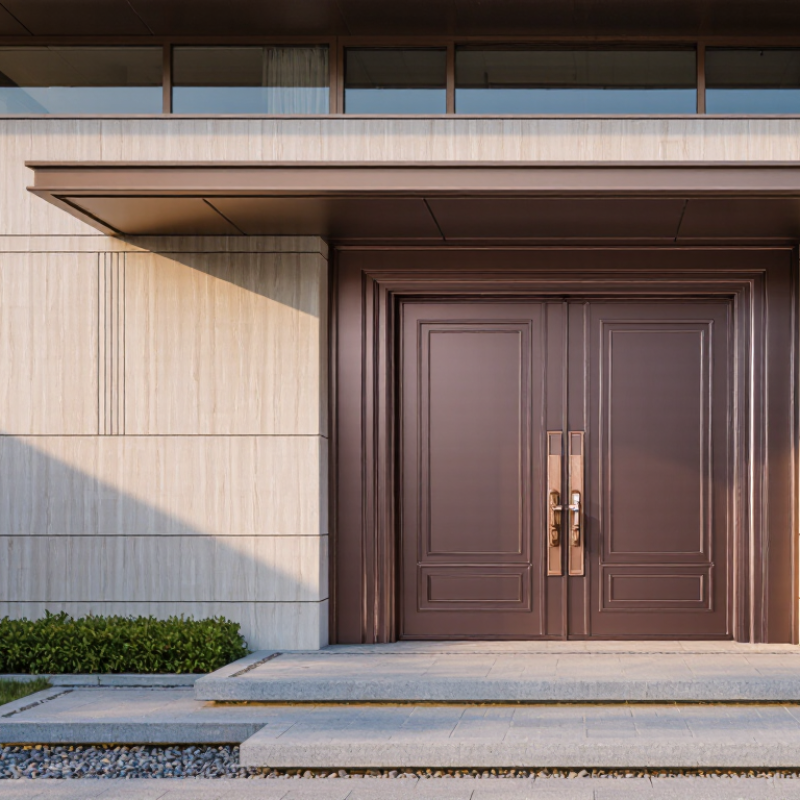
Luxury aluminum entry doors pair a clean, narrow frame with strong structural support. Slim sightlines let more daylight reach the entry without making the door feel visually heavy. Look for a thermal break inside the frame; it can reduce heat transfer between outdoor and indoor surfaces. Quality weather seals also help limit drafts and rain intrusion. A multi-point lock can hold the door more evenly against its seals.
The finish deserves close attention. A durable powder-coated surface can resist fading and everyday scratches, but color samples may look different under your porch lighting. Check hinge strength, threshold design, and glass specifications, too. These details affect daily use, comfort, and privacy. Aluminum is not maintenance-free: inspect seals and hardware periodically, especially after harsh weather. Even a premium-looking door may disappoint if installation leaves gaps. That detail is easy to underestimate.
Tips: Ask for frame-section and glazing details, not just a photo. Test the handle and lock before ordering. Measure the opening carefully, and confirm how the sill manages water. Small checks matter.
China’s luxury aluminum entry-door industry is organized as a supply chain, not a single factory model. Upstream producers supply aluminum billets and profiles; specialist processors add thermal breaks, finishes, and precision-cut frames. Door manufacturers then combine these parts with glass, hardware, seals, and custom panels. Installation firms complete the chain, measuring openings and adjusting thresholds on site. A small measurement error can spoil an expensive door.
The International Aluminium Institute reported about 41.5 million tonnes of primary aluminum production in China in 2023, close to 59% of global output. This signals a deep raw-material base, but it does not measure luxury-door production. Capacity is spread across regional clusters, while quality depends on tighter controls: alloy consistency, coating thickness, corner-joint strength, and water-tightness testing. Buyers should ask for test reports tied to the actual door system, not just a profile sample. That distinction is easy to miss.
Tips: Confirm who handles design, fabrication, and installation. Request a full-size finish sample, and check seal details before production. Specifications can look complete on paper, yet site conditions still cause surprises.
The chart shows a typical sequence of activities across the supply chain, from design and material sourcing through fabrication, assembly, and quality checks. The numbers indicate workflow order—not market share or company rankings. Individual manufacturers may combine or reorder stages.
Selecting a luxury aluminum entry door manufacturer starts with evidence, not showroom language. Ask for alloy and temper data, profile-wall dimensions, and thermal-break details. A cross-section sample can reveal whether insulation strips sit evenly and corner joints align. Look closely. Check coating specifications, color consistency in daylight, and documented resistance testing for coastal exposure. Test reports should identify the tested assembly, not merely a material coupon. Small distinction, big consequence.
Performance depends on more than the frame. Request air, water, and structural test results for a door close to your intended size and configuration. Inspect hinge reinforcement, multipoint-lock alignment, threshold drainage, and replaceable weather seals. Ask how glass units are sourced, sealed, and protected during delivery. Reliable manufacturers provide drawings, installation guidance, traceable components, and a clear process for replacement parts. Visit a completed project if possible; check the bottom corners after rain, not only the polished handle. Warranty terms matter, but response times matter too. A beautiful door can still bind when the opening is out of square. No checklist catches every defect. Compare factory quality controls with installer capability, since careful fabrication cannot correct poor site measurements.
China’s luxury aluminum entry-door sector includes manufacturers with distinct strengths. These ten profiles reflect useful differences, not a verified ranking. One coastal producer focuses on slim frames and large glass panels, with careful attention to clean corner joints. A second specializes in oversized pivot doors, where balanced hardware matters as much as appearance. A third offers wood-grain finishes, though buyers should compare samples in daylight. A fourth makes thermally broken frames for homes facing hot summers or cold winters.
Another manufacturer emphasizes custom dimensions and can adapt designs for unusual entrance openings. A sixth pairs aluminum with decorative glass, including textured panels that soften direct sunlight. A seventh concentrates on heavy-duty locks and reinforced hinges, details worth checking on a physical sample. An eighth supplies coordinated side panels and transoms for wider entrances. Its installation guidance may need close review.
A ninth producer offers a broad range of surface colors, but finish consistency can vary between batches. A tenth focuses on made-to-order doors and project coordination. Ask how measurements, packaging, and delivery schedules are handled. Look for clear material specifications, test documentation, and responsive after-sales support. Catalog photos help, but they cannot show every weakness. Some details only become clear when the door is installed and used.
The profiles below describe common luxury aluminum entry-door product categories available in the Chinese market. They are not company-specific profiles or a verified ranking; no manufacturer names or brands are shown.
| No. | Product Profile | Typical Construction | Design Features | Options to Confirm | Buyer Verification Points |
|---|---|---|---|---|---|
| 01 | Thermally broken entry door | Aluminum profiles with a thermal break between the inner and outer sections. | Suitable for contemporary homes; can be specified with solid or glazed panels. | Profile depth, thermal-break material, glazing, seals, and finish. | Request tested thermal-performance data for the complete door assembly, not just the frame. |
| 02 | Oversized pivot door | Large-format aluminum door leaf supported by top and floor pivot hardware. | Wide, minimalist entrance appearance with a concealed or visually prominent pivot. | Maximum tested leaf size and weight, pivot location, closer, and threshold detail. | Confirm hardware load ratings and installation requirements for the specified door dimensions. |
| 03 | Flush-panel modern door | Aluminum frame with a smooth-faced insulated or decorative panel. | Plain surfaces, concealed details, and optional long pull handles. | Panel composition, thickness, edge detail, handle, and surface coating. | Ask for panel build-up, weather-sealing details, and finish samples for approval. |
| 04 | Glazed aluminum entrance door | Aluminum framing combined with safety glazing selected for the application. | Brings daylight into an entryway; available with clear, tinted, or patterned glass. | Glass type, thickness, insulating-glass build-up, privacy, and safety markings. | Check local code requirements and obtain glass documentation for the intended location. |
| 05 | Aluminum-and-glass double door | Paired door leaves in an aluminum frame, with solid, glazed, or mixed infill. | Creates a broad entrance and can coordinate with sidelights or a transom. | Active and inactive leaf hardware, meeting-stile seals, and overall opening size. | Confirm the locking arrangement and weather-sealing performance at the meeting stiles. |
| 06 | Decorative slatted-panel door | Aluminum door assembly with linear applied or integrated decorative elements. | Adds texture and shadow lines while allowing coordinated exterior detailing. | Slat spacing, orientation, panel backing, drainage, and coating specification. | Review a full-size finish sample and confirm how exposed joints are protected from water. |
| 07 | Wood-look aluminum door | Aluminum surfaces finished with a wood-grain decorative effect. | Offers a wood-inspired appearance without using solid timber for the exposed aluminum surface. | Grain pattern, color, coating process, and matching frame finish. | Request samples and coating-performance documentation for the project’s exposure conditions. |
| 08 | Minimal-frame glazed door | Glazed leaf designed with narrow visible aluminum sightlines. | Emphasizes glass and a clean architectural appearance. | Permitted glass size and weight, hardware compatibility, and frame dimensions. | Verify the tested door configuration and safety-glazing requirements before ordering. |
| 09 | Insulated solid-panel security door | Solid-faced aluminum door assembly with a specified core and reinforced hardware zones. | Provides a more private entry design with limited or no glazing. | Core material, lock preparation, hinges, frame anchoring, and available test ratings. | Do not assume a security rating; request independent test reports for the exact assembly. |
| 10 | Custom architectural entrance system | Made-to-order door coordinated with a frame, sidelights, transom, or adjacent glazing. | Designed around project dimensions, facade details, and selected hardware. | Shop drawings, tolerances, finish schedule, packing, and installation scope. | Approve drawings and physical samples; confirm applicable tests, warranty terms, and delivery responsibilities. |
Note: Product configurations and performance vary by model and project. Confirm specifications, certifications, and test results directly for the exact door assembly and destination market.
When comparing China’s top 10 luxury aluminum entry door manufacturers, look beyond polished catalog photos. Design should suit the building, not just a showroom wall. Ask for finish samples and inspect them in daylight; a bronze tone can look quite different indoors. Check whether the frame, glass, handle, and hinges work as one design. Small details matter.
Tips: Request a drawing with dimensions, opening direction, and hardware locations. Ask how the finish is tested and what care it needs. Confirm the quoted specification matches the sample. Keep records.
Quality shows in practical details. Look for even gaps, smooth operation, firm seals, and sturdy hinges. Ask about aluminum thickness, thermal breaks, and glazing options, then compare like for like. A heavy door is not automatically a better door. Installation also affects performance, so clarify who provides guidance and how damaged parts are handled. Ask for written warranty terms and a clear response contact. No catalog tells the whole story. Even careful comparisons can miss something; site conditions and installation may change the result. A responsive support team should answer specific questions without vague promises, before and after delivery.
A thermal break can reduce heat transfer through the frame. Good seals help limit drafts and rain. Not magic, though.
Narrow sightlines can bring more daylight into an entry. They also keep the door from looking visually heavy.
Check hinge strength, threshold design, glass specifications, and the handle. Ask for frame-section details, not just a photo. Small checks matter.
View color samples in daylight and under porch lighting. A durable powder-coated finish can resist fading and everyday scratches, but batches may vary.
Textured glass can soften direct sunlight. Compare privacy and glazing details in person; a catalog image may not tell the whole story.
A multi-point lock can press the door more evenly against its seals. Reinforced hinges matter, especially on oversized doors. Test the hardware first.
Confirm the opening measurements, packaging, and delivery schedule. For unusual entrances, check how the door dimensions will be adapted. Measure twice, perhaps.
Yes. Gaps from poor installation can undermine comfort and weather protection. Inspect the sill’s water handling, then check seals after harsh weather. I might overlook that, too.
This article explores the features that define a Luxury Aluminum Entry Door, including durable construction, refined finishes, security, energy efficiency, and design flexibility. It explains how China’s luxury aluminum entry door industry is organized, from material and component suppliers to manufacturers that handle design, production, customization, and customer service. Readers will also learn which factors matter when evaluating manufacturers, such as product quality, craftsmanship, testing standards, customization options, delivery capabilities, and after-sales support.
The article presents profiles of ten manufacturers in China without relying on brand names, highlighting the different strengths and approaches found across the market. A comparison of their design choices, quality practices, and customer support helps readers understand how to assess potential suppliers and identify products suited to different architectural styles and project requirements.

ShieldCraft Doors