Top Aluminium Front Door Manufacturers for Global Buyers

Time:2026-10-09 Author:Liam
0%

Choosing an Aluminium Front Door for an international project involves more than comparing photographs and factory prices. Buyers must assess design, thermal performance, weather resistance, security, and after-sales support. A door may look impressive in a showroom, yet perform poorly beside a wind-driven coastline or a freezing entrance hall.

Dr. Joseph Lstiburek, a respected building-science expert, has stated, “Water is the building’s worst enemy.” This principle matters when evaluating Aluminium Front Door manufacturers. Strong suppliers explain drainage paths, sill construction, gasket quality, and finish durability. They also provide measurable data, including air leakage, water penetration, wind-load, and thermal-transmission results. Clear documentation builds trust.

Materials matter too. Buyers should ask whether the frame uses a genuine thermal break, suitable aluminium alloys, and corrosion-resistant hardware. Powder coating should be assessed against the project’s climate, not selected only by colour. Coastal buildings need extra attention. Salt air is unforgiving.

Details decide outcomes.

A reliable manufacturer can provide shop drawings, sample corners, installation guidance, and replacement-part information. Factory experience is valuable, but it should be supported by independent testing and transparent warranties. Some suppliers promise everything. That is a warning sign.

No single manufacturer suits every market. Local code requirements, opening sizes, delivery routes, and installer skill can change the best choice. Even a well-engineered door may fail after careless installation. This guide compares leading Aluminium Front Door manufacturers through practical evidence, technical capability, product consistency, and buyer feedback. The process is not perfectly simple. It requires questions, verification, and occasionally a second opinion.
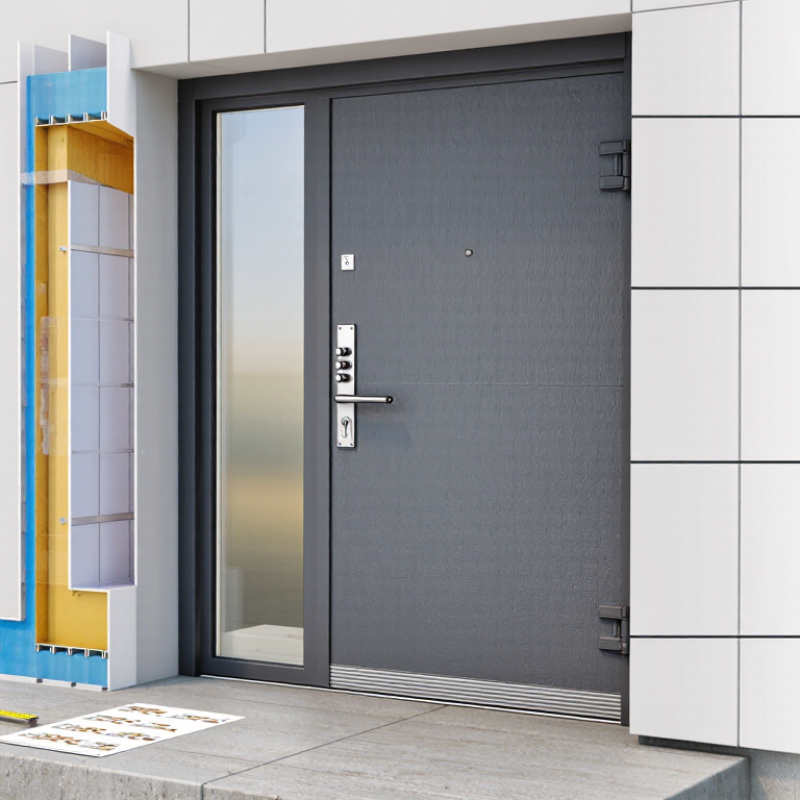
Top Aluminium Front Door Manufacturers for Global Buyers

What Defines a Top Aluminium Front Door Manufacturer

A top aluminium front door manufacturer proves performance beyond attractive showroom samples. It controls alloy selection, extrusion accuracy, thermal breaks, coatings, and hardware compatibility. Small gaps around a frame can cause drafts, water entry, and expensive callbacks. Experienced manufacturers therefore document air, water, and structural testing under recognized door standards. They should also provide thermal data, not vague claims such as “energy saving.”

Independent verification matters. The International Aluminium Institute reports that recycling aluminium can use up to 95% less energy than primary production. A responsible manufacturer should show recycled content, trace material origins, and explain coating durability. It should also provide product-specific U-values and test conditions. Figures without test methods are weak evidence. They may still mislead buyers.

Reliable suppliers communicate clearly before production starts. They confirm opening dimensions, drainage paths, glass specifications, wind exposure, and local installation requirements. Their technical drawings should match the delivered door. Their packaging should protect corners, hinges, and finished surfaces during long-distance shipping. No factory is flawless. However, a strong one records defects, investigates root causes, and improves its process. That humility is useful. A polished catalogue cannot replace factory audits, sample inspections, and references from comparable projects. Global buyers should examine warranty exclusions carefully, especially for coastal corrosion, color fading, and installation-related failures.

What Defines a Top Aluminium Front Door Manufacturer?

A capable manufacturer should be able to design, test and document performance against recognized European classification standards. The chart shows the highest numbered classes available in three commonly used external-door tests; higher values indicate a higher classification within that specific test scale.

Reference framework: EN 12207 for air permeability, EN 12208 for watertightness and EN 12210 for resistance to wind load. These classification scales should not be treated as a direct comparison of manufacturers or as a complete product-performance ranking.

Key Manufacturing Standards and Product Quality Indicators

Top aluminium front door manufacturers for global buyers should prove quality through measurable standards, not polished catalogues. The IEA’s 2023 Global Status Report for Buildings and Construction reported that buildings used about 30% of global final energy in 2022. Thermal performance therefore deserves serious attention. Buyers should request tested U-values, air-leakage results, and thermal-break specifications. EN 14351-1 supports performance assessment for external pedestrian doorsets. ASTM E283, E331, and E330 can verify air, water, and structural resistance.

Material consistency matters. Common architectural aluminium alloys, such as 6063 grades, should include traceable mill certificates and controlled temper records. Powder coating needs documented thickness, adhesion, colour stability, and corrosion testing. ISO 9227 salt-spray testing is useful, but it is not a complete prediction of outdoor service life. Real exposure differs by coast, pollution, and installation quality.

Look closely at the details. Strong corner joints, continuous gaskets, drainage paths, accurate hinges, and protected locks often separate reliable doors from attractive samples. Independent laboratory reports are more credible than unsupported factory claims. A practical inspection should check frame squareness, surface scratches, seal compression, and hardware movement.

One weakness remains.

Some suppliers publish impressive thermal figures from ideal test sizes. Larger doors may perform differently. Global buyers should compare identical dimensions and request complete test conditions. That extra step feels slow, but it prevents expensive assumptions.

Major Aluminium Front Door Manufacturing Regions

Major Aluminium Front Door Manufacturing Regions

China remains one of the largest aluminium front door manufacturing regions for global buyers. Its factories often provide broad design choices, automated cutting, and competitive production capacity. Buyers can request thermal-break frames, powder-coated finishes, laminated glass, and multi-point locking systems. Production quality varies, so factory audits and sample inspections remain essential. A polished showroom does not always prove stable workshop control.

Turkey has developed strong manufacturing clusters serving Europe, the Middle East, and nearby markets. Its advantages include flexible customization, shorter regional shipping routes, and experience with large entrance doors. Many manufacturers work with insulated aluminium profiles and decorative panel systems. However, delivery schedules may change during busy construction seasons. Written production milestones can reduce unpleasant surprises.

Italy, Germany, and several Central European countries are known for precise engineering and refined door design. Their manufacturers often emphasize profile performance, weather resistance, hardware integration, and careful surface finishing. These regions may suit projects requiring strict tolerances or architectural coordination. Costs can be higher, especially for custom dimensions and low-volume orders. That is not automatically a disadvantage, but buyers should compare performance rather than price alone.

North Africa and Southeast Asia are also gaining attention. Their factories may offer practical pricing and growing export experience, yet documentation and quality systems can differ widely. Ask for test reports, coating specifications, packing photographs, and recent project references. I would not rely on catalog images alone. Even experienced buyers sometimes overlook hinge alignment after installation, which can undermine an otherwise well-made door.

How Global Buyers Should Evaluate Potential Suppliers

Selecting aluminium front door manufacturers requires more than comparing catalog prices. Global buyers should verify alloy grades, profile thickness, thermal-break design, and hardware specifications. Ask for test reports covering air leakage, water resistance, wind load, and thermal performance. A reliable supplier can explain each result clearly, not merely send a scanned certificate.

Request a production sample before placing a large order. Check corner joints, drainage paths, coating consistency, and lock alignment by hand. Small defects become expensive after installation. Confirm the powder-coating standard, color tolerance, packaging method, and replacement process in writing. Also review the supplier’s export experience, production capacity, lead times, and quality-control records. Factory photos are useful, but an independent audit is stronger evidence.

Communication deserves careful testing. Send the same technical questions to several manufacturers and compare their answers. Vague replies may signal weak engineering support. A capable team should provide shop drawings, realistic tolerances, installation guidance, and clear shipping documents. One overlooked detail is local compliance. Door dimensions, glazing rules, fire requirements, and energy standards vary by market. Even experienced buyers can miss this step. I have seen attractive quotations fail because the frame size did not match regional construction practice. Price matters, but traceable materials, consistent inspections, and responsive after-sales support usually protect the project better. A supplier should welcome difficult questions. That response reveals more than a polished showroom.

Ordering, Customization, Compliance, and Export Considerations

Top Aluminium Front Door Manufacturers for Global Buyers

Global buyers should treat ordering as a technical process, not a catalog exercise. Confirm opening size, wall depth, thermal-break design, glazing specification, finish, hardware, and swing direction. Request a shop drawing before production. Aluminium remains a major global material; the International Aluminium Institute reported about 70.6 million tonnes of primary aluminium production in 2023. That scale supports supply, but it does not guarantee consistent door quality.

Customization needs measurable evidence. Ask for air, water, wind, thermal, and security test reports matching the intended market. Confirm whether reports cover the complete door assembly, not only the frame. For export, provide the correct HS classification, commercial invoice, packing list, certificate of origin, and tested material declarations. Local rules may require specific fire, energy, or safety documentation. WTO analysis found that full Trade Facilitation Agreement implementation could reduce trade costs by 14.3% on average. Documentation matters.

Tips: Specify Incoterms clearly. Define who pays unloading and import duties. Use moisture-resistant corner protection and vertical crate bracing. Check the prototype before approving mass production. A perfect quotation is not always a reliable one. I have seen attractive prices hide weak packaging, unclear tolerances, or missing test scope. Recheck those details. Allow extra time for revisions, port delays, and local inspection.

FAQS

What should define a high-quality aluminium front door manufacturer?

It should control alloy selection, extrusion accuracy, thermal breaks, coatings, and compatible hardware. Attractive samples are not enough.

Which performance tests should buyers request?

Request air, water, structural, thermal, and security test reports. Confirm they cover the complete door assembly.

Why are tested U-values important?

U-values show how much heat passes through the door. Ask for the test size, conditions, glazing, and thermal-break details.

What material documents should a manufacturer provide?

Request traceable mill certificates, alloy details, temper records, recycled-content information, and coating test results.

Which physical details often reveal product quality?

Inspect square frames, tight gaskets, clear drainage paths, firm hinges, smooth locks, and even seal compression.

How should buyers check customization before production?

Confirm opening dimensions, wall depth, glass type, finish, swing direction, hardware, and drainage. Request a shop drawing.

What should export packaging protect?

Use corner protection, moisture-resistant materials, and vertical crate bracing. Hinges and finished surfaces need special care.

Why can a low quotation become expensive later?

It may hide weak packaging, unclear tolerances, missing tests, or excluded duties. Cheap can become costly.

How should buyers review warranty coverage?

Check exclusions for coastal corrosion, fading, installation errors, glass, and hardware. Read the uncomfortable parts.

Can factory audits and prototypes prevent problems?

They can reveal scratches, poor joints, incorrect dimensions, and weak packaging before mass production. Not perfectly, though.

Conclusion

Choosing a top Aluminium Front Door manufacturer requires more than comparing prices. Global buyers should assess production experience, engineering capability, material consistency, surface treatment, thermal performance, security features, and quality-control procedures. Reliable manufacturers typically follow recognized manufacturing standards, use durable aluminium alloys and hardware, and provide clear product specifications, inspection records, and performance data. Major manufacturing regions may offer different advantages in design expertise, production scale, customization capacity, lead times, and logistics, so buyers should evaluate suppliers according to project requirements rather than location alone.

A professional supplier should support custom dimensions, colors, glazing options, opening styles, packaging, and project-specific technical details. Before ordering, buyers should confirm minimum quantities, samples, tooling costs, warranty terms, delivery schedules, payment conditions, and export documentation. Compliance with destination-market building, safety, energy-efficiency, labeling, and environmental requirements is also essential. By reviewing factory capabilities, communication quality, testing procedures, and after-sales support, buyers can select a dependable partner and reduce risks throughout the purchasing and export process.

Liam

Liam

Liam is a dedicated marketing professional with a profound expertise in the industry, where he excels at highlighting the unique advantages of our core products. With a keen understanding of market trends and consumer needs, Liam frequently updates our company’s professional blog, providing......