Modern homes often use doors to shape light, movement, and the connection between indoors and outdoors. An Aluminum Residential Door can suit clean-lined architecture while offering a durable frame and flexible design options. The best choice depends on the opening, the climate, and how people use the space each day.
Hinged doors remain practical for entryways, while sliding models save floor space beside patios. Bi-fold doors can open a wider span, though their tracks and hardware need careful attention. Pivot doors create a bold entrance, but they may require more clearance and precise installation. French-style pairs bring symmetry and daylight, especially when fitted with glazed panels.
Small details matter. Look at frame depth, weather seals, glazing, and the quality of locks and hinges. A slim frame can increase the glass area, yet performance depends on the complete door system, not appearance alone. Ask the supplier for product specifications and confirm that the design suits local weather conditions. Installation also deserves attention; even a well-made door can feel drafty if it is poorly fitted.
There is no perfect type. A large glass door may brighten a room, but it can reduce privacy or increase heat gain without suitable glazing and shading. Compare how each option handles daily traffic, cleaning, and maintenance before deciding. The right door should feel natural in use, not just look impressive in a photo.
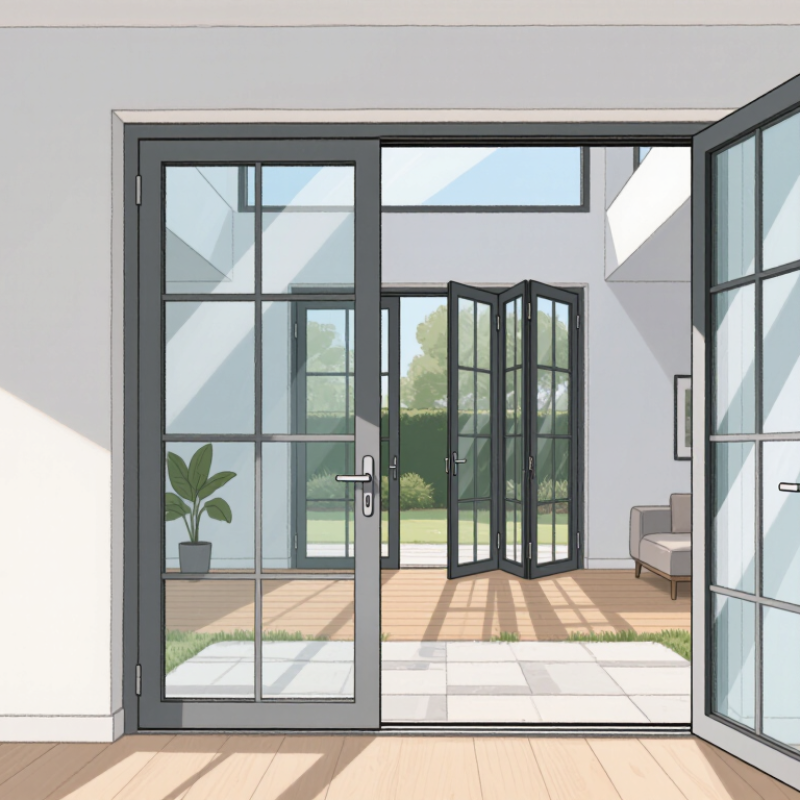
Aluminum residential doors are built around rigid extruded profiles that form the frame and sash. Their strength allows relatively slim sightlines, leaving more room for glass without making the moving panel excessively heavy. Inside the profiles, chambers help manage heat transfer and improve rigidity. Some designs add a thermal break, usually a strip of insulating material between the inner and outer aluminum sections. It can reduce cold interior surfaces in winter, though the result also depends on glazing, installation, and local climate.
Glass is typically held by gaskets and glazing beads, while weather seals around the panel help limit drafts and rain. Look closely at the lower frame: drainage channels and weep openings give water a path back outside.
Small details. Poorly maintained openings can clog, so they deserve a quick check now and then.
Hinges, rollers, and locks must also suit the door’s weight and opening style. A smooth sample-room panel is not proof that installation will be equally precise.
The exterior finish often uses a durable coating or anodized surface to resist weathering, but aluminum can still show scratches or wear. Frame depth, glass specification, and seal quality vary considerably. I would not judge a door by profile appearance alone; that is an easy mistake. Compare construction details and ask how the frame connects to the wall, since even a well-made door can perform poorly when that junction is left exposed or poorly sealed.
Hinged aluminum doors remain a practical choice for entrances, patios, and side access. Their familiar swing action makes daily use simple, and good compression seals can help limit drafts when the door closes. They feel familiar. The main drawback is clearance: a leaf needs room to swing without hitting furniture, steps, or a nearby wall. Measure the full opening path, not just the frame. Outward-opening doors may also need protection from strong wind.
Sliding doors move along tracks, so they suit rooms where swing space is limited. They can bring daylight into a living area, though a standard two-panel design usually leaves only part of the opening clear. Keep tracks free of grit; small stones can make movement rough. Bi-fold doors fold into stacked panels, creating a wider passage for decks or gardens. They need accurate alignment and more attention to hardware. Pivot doors rotate around offset hinges and can make a broad, clean-lined entrance. Yet they require suitable structural support and enough space on both sides. Space matters. The best operating style depends on the room layout, opening size, threshold, and how often the door will be used. A large opening looks appealing, but it may not be the easiest one to operate every day.
For a main entrance, a hinged aluminum door offers a familiar swing and a clean, modern frame. It suits homes with a sheltered porch and enough clearance indoors. Choose insulated glazing or a solid panel for privacy, and check that the threshold sheds rain away from the entry. Small details matter.
Sliding aluminum doors work well between living rooms and patios, especially where a swinging leaf would block furniture. Their wide glass panels bring in daylight, but track quality affects how smoothly they move. For a broader opening, folding doors can connect indoor and outdoor spaces. They need room to stack open, and their seals may require more attention in exposed locations. A balcony door also benefits from a low-profile threshold, provided the design still manages water safely.
Tips: Match the door to its location, not just its appearance. Ask about thermal breaks, glass specifications, locking points, and drainage. Measure the finished opening, including flooring. Good fit. A common oversight is choosing a large glass area before considering afternoon glare or privacy. Think about curtains or external shading early; it is easier to plan now than retrofit later.
Aluminum residential doors suit modern homes because slim frames leave more room for glass. Choose hinged doors for a defined entry, sliders for patios, or multi-panel systems for wider openings. A pivot door creates a dramatic entrance, but its weight and swing clearance need careful planning. Measure twice.
Glazing changes comfort as much as appearance. Clear double-pane glass keeps rooms bright; low-emissivity coatings can limit unwanted heat transfer, while frosted glass softens views in bathrooms or street-facing entries. The U.S. Department of Energy’s Energy Saver guidance estimates that heat gain and loss through windows account for 25–30% of home heating and cooling energy use. That figure is not specific to doors, but it underlines why glazed areas deserve attention. The National Fenestration Rating Council’s ratings let homeowners compare U-factor and solar heat gain coefficient across products. Check the threshold.
A thermally broken aluminum frame can reduce heat flow through the metal, though installation still matters. A narrow dark frame may look crisp, yet feel stark in a north-facing room; sample colors beside the actual flooring and wall finish. Consider how panels open, where handles land, and whether furniture blocks the swing. A beautiful configuration can become awkward in daily use.
Example nominal overall widths for common configurations built from 36-inch-wide door leaves.
A single hinged door is shown at 36 inches; paired hinged and two-panel sliding doors at 72 inches; and three-panel sliding and four-panel folding configurations at 108 and 144 inches. These are illustrative nominal overall widths based on 36-inch leaves, not universal standards. Actual frame dimensions, glazing layouts, and available sizes vary by product and opening.
Choosing an aluminum door type means comparing more than appearance.
Hinged doors usually provide a straightforward seal when properly installed, but they need clear swing space.
Sliding doors save room and bring in broad views; their tracks must stay clean for smooth operation.
Folding doors can open a wide span, though they have more moving parts to adjust.
Thermal performance depends on the whole assembly, not aluminum alone.
Look for a thermally broken frame, suitable glazing, and continuous weather seals.
A useful check: feel near the frame on a cold day. That is only a clue.
Large glass panels can improve daylight but may increase heat gain or loss, depending on glazing and orientation.
Ask for documented thermal ratings for the complete door, not just the glass.
Wind resistance, water management, and hardware also matter.
Inspect corner joints, drainage openings, locking points, and the sill where rain may collect.
This detail is easy to miss.
A low threshold can improve access, but it still needs careful drainage design.
Sound control varies with glass, seals, and installation quality.
When comparing options, consider the room layout, local weather exposure, and maintenance needs.
Expect trade-offs.
A door that looks minimal may require more frequent track cleaning than a simpler hinged design.
A hinged door offers a familiar swing and suits a sheltered entrance with enough clearance. Check the threshold and rain drainage. Small details matter.
Yes. They save swing space and bring daylight indoors. A two-panel design usually leaves only part of the opening clear, and grit can make tracks rough.
Choose them when you want a wider passage to a deck or garden. The panels need room to stack, and their alignment and hardware need attention.
Pivot doors create a broad, clean-lined entrance. They need structural support and clear space on both sides. Looks are not the whole story.
Clear double-pane glass keeps rooms bright. Low-emissivity coatings can limit unwanted heat transfer, while frosted glass softens views in bathrooms or street-facing entries.
They can. General energy guidance estimates that windows account for 25–30% of home heating and cooling energy use; that figure is not specific to doors. Compare U-factor and solar heat gain ratings.
Measure the finished opening, including flooring. For hinged doors, check the full swing path. Measure twice.
Consider thermal breaks, locking points, drainage, glare, and privacy. Check where handles land and whether furniture blocks the door. I might still miss something—view the samples beside your actual flooring and walls.
Aluminum Residential Door options combine a lightweight frame with strength, making them suitable for a wide range of modern homes. Their construction typically pairs aluminum profiles with insulated cores or glazing, while finishes and thermal breaks can influence comfort, durability, and maintenance needs. Operating styles include hinged, sliding, folding, and pivot designs, each offering a different balance of space efficiency, access, and visual impact.
The best type depends on where the door will be used. Hinged doors suit main entrances, while sliding and folding configurations can connect living areas with patios or gardens. Glazing choices, frame proportions, panel layouts, colors, and hardware allow homeowners to tailor privacy and natural light. When comparing options, consider insulation, weather resistance, security features, ease of operation, available space, and the home’s architectural style.

ShieldCraft Doors