Top 10 Types of Aluminum Entrance Doors for Global Buyers

Time:2026-10-14 Author:Aria
0%

Choosing an Aluminum Entrance Door is no longer a simple matter of color, size, and price. Global buyers now examine thermal performance, security hardware, corrosion resistance, glazing, installation quality, and lifecycle cost. The right door must survive real conditions: coastal salt, winter frost, strong sunlight, heavy rain, and repeated daily use.

Industry data supports this broader view. Grand View Research’s recent analysis of the global doors and windows market identifies construction growth, renovation demand, and energy efficiency as major market drivers. Fortune Business Insights also reports rising demand for durable, low-maintenance door systems in commercial and residential projects. Meanwhile, International Aluminium Institute publications highlight aluminum’s strong recycling potential and continuing role in sustainable construction. These reports offer useful direction, but they cannot replace project-specific testing.

This guide introduces ten practical types of Aluminum Entrance Door for international buyers. It considers framed glass doors, thermal-break systems, pivot doors, sliding entrances, louvered models, fire-rated assemblies, and other widely used configurations. Each type has a different balance of appearance, insulation, security, maintenance, and cost. A narrow black frame may look elegant in a showroom, yet poor installation can create air leakage around the threshold. That detail is easy to miss.

No ranking is perfect. Climate, building codes, opening dimensions, and local supply chains can change the best choice. Buyers should verify tested U-values, air and water performance, hardware quality, finish standards, and installer experience before placing an order. The strongest decision is rarely the cheapest one. It is the one that performs reliably after years of opening, closing, cleaning, and weather exposure.
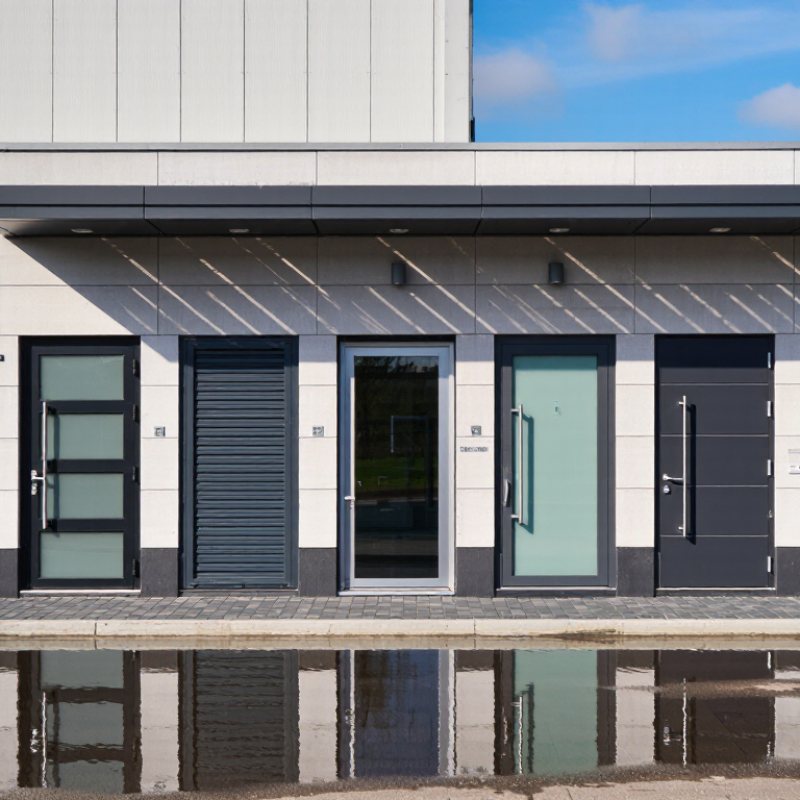
Top 10 Types of Aluminum Entrance Doors for Global Buyers

Define Aluminum Entrance Doors by Frame, Opening, and Glazing Architecture

Top 10 Types of Aluminum Entrance Doors for Global Buyers

Define Aluminum Entrance Doors by Frame, Opening, and Glazing Architecture

Aluminum entrance doors are easier to compare when buyers study three structures: the frame, opening method, and glazing layout. A thermally broken frame improves indoor comfort, especially in cold or hot regions. Slim frames create a cleaner view, while reinforced profiles support wide or heavy leaves. Coastal projects need durable surface protection and carefully sealed joints.

Details matter.

The ten common configurations include single-leaf, double-leaf, sliding, pivot, folding, telescopic, arched, transom, sidelighted, and fully glazed doors. These categories can overlap. For example, a pivot door may include a transom and narrow sidelights. A double-leaf entrance may use insulated glass or decorative panels. Opening direction also affects circulation, furniture delivery, accessibility, and emergency planning. A beautiful door can still perform poorly if its swing conflicts with a crowded lobby.

Glazing architecture defines light, privacy, and security. Clear glass suits offices and retail entrances, while laminated, low-emissivity, tinted, or frosted glass serves different performance needs. Multi-panel glazing provides visual rhythm, but each joint requires accurate drainage and sealing. I have seen projects focus on appearance and underestimate threshold design. That mistake often causes drafts, water entry, or difficult cleaning. Ask for tested air, water, wind, thermal, and hardware performance.

Keep it practical.

The best specification matches local climate, building use, maintenance skills, and expected traffic rather than chasing the largest glass area.

Classify the Top 10 Types: Hinged, Sliding, Folding, Pivot, and More

Top 10 Types of Aluminum Entrance Doors for Global Buyers

Single hinged doors suit compact entrances and simple traffic flow.
Double hinged doors create a wider opening for hotels, offices, and public buildings.
Sliding doors save floor space and support smooth daily movement.
Telescopic sliding doors work well where the entrance width is limited.
Lift-and-slide doors provide large glass panels with improved sealing.
Folding doors stack into compact sections and connect indoor spaces with outdoor areas.
Multi-fold doors offer wider openings, but their hardware needs careful adjustment.
Pivot doors rotate from offset points and create a strong architectural statement.
French-style aluminum doors add symmetry through two opening panels.
Automatic sensor doors improve hands-free access in busy commercial locations.

In real projects, no type wins every time. A pivot door may look impressive, yet it needs enough circulation space. Sliding systems are efficient, but their tracks collect dust and require cleaning. Hinged doors usually seal well, although heavy glass can stress hinges. Buyers should check thermal breaks, drainage paths, locking points, and frame thickness. Local wind, energy, accessibility, and fire requirements also matter. Measurements must include finished floors, wall tolerance, and delivery access.

Tips:

  • Confirm the opening direction before ordering.
  • Request tested air, water, and wind performance.
  • Choose laminated or tempered safety glass where required.
  • Inspect rollers, hinges, seals, and drainage during installation.
  • Small mistakes become expensive later.
  • A detailed site survey prevents many avoidable revisions.

Compare U-Factor, Air Leakage, and Water Resistance Under ASTM E283 and E331

Top 10 Types of Aluminum Entrance Doors for Global Buyers

Aluminum entrance doors differ widely, including hinged, pivot, sliding, folding, and thermally broken designs. Their frames, thresholds, seals, and glass areas strongly affect performance. For buyers, the U-factor indicates heat transfer through the complete door assembly. A lower U-factor generally means better insulation, but published values may cover glass only, not the installed frame and threshold.

ASTM E283 evaluates air leakage through a door assembly under a controlled pressure difference. Inspectors check whether air passes through joints, gaskets, hardware areas, or frame connections. Small gaps around the sill can create noticeable drafts. Test reports should identify the pressure level, specimen size, leakage rate, and laboratory conditions. Do not compare two values without checking the same test basis.

ASTM E331 evaluates water penetration under static pressure. Water is applied to the exterior while pressure simulates wind exposure. The result depends on drainage paths, corner seals, weep openings, and installation accuracy. E331 does not automatically define a universal pass or fail limit; project specifications usually set acceptance criteria. A door can show low air leakage yet still resist water poorly. That surprises inexperienced buyers. Field performance may also differ from laboratory results, especially with uneven substrates or damaged seals. Careful sill detailing matters. Select the door type only after reviewing the complete assembly report, tested pressure, U-factor method, and installation requirements.

Map Global Compliance: EN 14351-1 Classes 1–4, NFRC Ratings, and ADA 32-Inch Clearance

Choosing among the top 10 types of aluminum entrance doors requires more than comparing appearance. Global buyers should map compliance before approving drawings. Under EN 14351-1, performance documents may reference air permeability classes 1–4 through related test standards. Higher classes generally indicate better resistance to air leakage. However, the class alone does not prove complete weather performance. Check water tightness, wind resistance, thermal behavior, and test scope.

For North American projects, review NFRC ratings carefully. U-factor measures heat transfer, while Solar Heat Gain Coefficient shows how much solar energy enters. Visible Transmittance can affect daylight near the entrance. Condensation resistance is useful in cold climates, but it is not a guarantee against indoor moisture. A door with strong laboratory data may still perform poorly if installers leave gaps around the frame. Real sites are rarely perfect.

Accessibility needs equal attention. The finished opening should provide at least 32 inches of clear width, measured with the door open as required by the project standard. Hardware, seals, thresholds, and closer force can reduce usable clearance. A thick threshold may create a small step, even when the drawing looks compliant. Confirm dimensions after flooring, weather seals, and hardware are installed. Request full test reports, installation limits, and local approval requirements. They reveal more than a sales sheet.

Select by Climate, Security, Traffic, and Life-Cycle Cost Using Industry Data

Choosing among the top 10 aluminum entrance door types requires more than appearance. Thermally broken hinged, non-thermal hinged, glazed, solid-panel, sliding, automatic, pivot, telescopic, fire-rated, and wind-rated doors serve different buildings. Climate comes first. The U.S. Department of Energy reports that windows can represent 25–30% of residential heating and cooling energy use. Glazed entrances therefore need low-emissivity glass, insulated frames, and tested air seals in cold or hot regions. In coastal areas, specify corrosion-resistant finishes and review ISO 9223 exposure conditions.

Security and traffic change the decision. A solid-panel or reinforced hinged door generally offers stronger resistance than a lightweight sliding system. Buyers should request tested performance under EN 1627, where RC2 or RC3 classifications indicate increasing resistance levels. Automatic and telescopic doors suit airports, hospitals, and retail entrances with constant movement. Yet their sensors, operators, and seals require planned maintenance. High-traffic doors can become expensive when small failures stop access.

Life-cycle cost deserves harder attention. A cheaper non-thermal door may waste energy in air-conditioned buildings. A premium pivot door may also perform poorly if hinges, drainage, or installation are overlooked. Fire-rated models must match the required tested assembly, not merely use thicker aluminum. That distinction is often missed. My practical rule is simple: compare thermal transmittance, air leakage, water resistance, cycle testing, repair access, and warranty terms together. Laboratory figures help, but site exposure can be less forgiving.

FAQS

What do air permeability classes 1–4 indicate?

They generally show resistance to air leakage. Higher classes usually perform better. A class alone does not confirm water tightness, wind resistance, or thermal performance.

Which documents should buyers request before approving an entrance door?

Request full test reports, installation limits, and local approval requirements. Check the tested size, materials, hardware, and installation conditions. Sales sheets can omit important limits.

What do U-factor and solar heat gain coefficient measure?

U-factor describes heat transfer through the door system. Lower values usually improve insulation. Solar heat gain coefficient shows how much sunlight becomes indoor heat. Visible transmittance affects daylight.

How can a glazed entrance perform better in difficult climates?

Use low-emissivity glass, insulated frames, and tested air seals. Hot, cold, and coastal climates need different specifications. Coastal projects also need corrosion-resistant finishes.

What clear opening is needed for accessible entrance doors?

The finished opening should provide at least 32 inches of clear width. Measure with the door open, according to the project standard. Hardware, seals, thresholds, and closers can reduce clearance.

Why should installation be checked after flooring and hardware are complete?

A thick threshold can create a small step. Gaps around the frame can reduce real performance. The drawing may look compliant. The finished entrance may not.

Which door types suit heavy pedestrian traffic?

Automatic and telescopic doors suit airports, hospitals, and busy retail entrances. They need planned maintenance for sensors, operators, seals, and access reliability. Small failures can stop movement.

How should security performance be compared?

Solid-panel or reinforced hinged doors generally resist forced entry better than lightweight sliding systems. Test classifications such as RC2 and RC3 indicate increasing resistance levels. Actual installation still matters.

Are fire-rated doors compliant simply because they use thick aluminum?

No. Fire performance depends on the complete tested assembly. The frame, glass, hardware, seals, and installation must match the required system. Thickness alone proves little.

How should life-cycle cost influence the selection?

Compare thermal performance, air leakage, water resistance, cycle testing, repair access, and warranty terms. A cheaper door may waste energy. A premium door may still fail through poor drainage or installation.

Conclusion

Choosing the right Aluminum Entrance Door requires more than comparing appearance. This guide explains how entrance doors are defined by frame construction, opening method, and glazing architecture, then introduces ten practical types, including hinged, sliding, folding, pivot, and other configurations. Each option is evaluated through key performance factors such as U-factor, air leakage, water resistance, durability, and ease of operation. Testing references including ASTM E283 and ASTM E331 help buyers understand air and water performance in realistic conditions.

The article also connects product selection with global requirements, covering EN 14351-1 performance classes 1–4, NFRC energy ratings, and ADA guidance for a minimum 32-inch clear opening. By considering climate, security needs, traffic intensity, maintenance, service life, and total life-cycle cost, buyers can select an entrance system that balances energy efficiency, accessibility, long-term reliability, and architectural goals across different markets.

Aria

Aria

Aria is a dedicated marketing professional with a deep passion for innovative strategies and a keen understanding of our company's product offerings. With a wealth of experience in the industry, Aria excels at crafting engaging content that highlights the unique features and benefits of our......