Choosing an Aluminium Entry Door is not simply a matter of selecting a colour or handle. Global buyers must compare climate, security, thermal performance, installation standards, and long-term maintenance. A coastal villa in Dubai faces different challenges from a townhouse in London. Salt air, intense sunlight, freezing temperatures, and heavy rain can all influence the correct door specification.
Industry consultant Dr. Mark Taylor observes, “The best aluminium entrance door is the one designed for its environment, not merely the one with the lowest price.” That principle guides this overview of the top 10 types of Aluminium Entry Door for international buyers. The list considers thermally broken systems, slim-frame designs, pivot doors, sliding entry doors, double doors, fire-rated options, acoustic models, smart-access doors, wood-effect finishes, and bespoke architectural units.
Each type offers practical advantages. A thermally broken door can reduce heat transfer through the frame. A pivot door may create a dramatic entrance, but it needs accurate floor preparation. A wood-effect finish can provide warmth without regular painting. Smart locks improve convenience, although electronic components still require dependable power and maintenance.
Specifications can look impressive on paper.
Yet buyers should question vague claims. “Weatherproof” does not always mean suitable for exposed coastal conditions. Security ratings may also vary between markets. Even the finest Aluminium Entry Door can perform poorly when measured incorrectly or installed carelessly. This guide therefore focuses on real purchasing decisions, visible construction details, and the compromises that global buyers sometimes overlook.
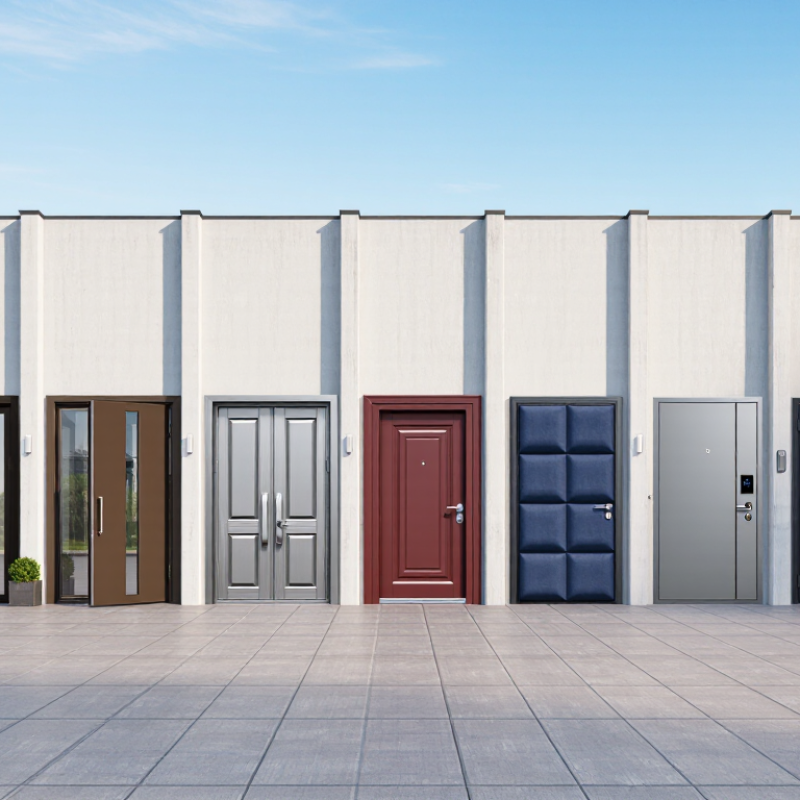
An aluminium entry door is built around a frame, sash, hinges, seals, and locking hardware. Aluminium offers a strong structure without the weight of many steel alternatives. It also resists swelling, splitting, and insect damage in changing climates. Proper thermal breaks reduce heat transfer through the frame. Without them, the interior surface may feel cold.
Design starts with proportion and practical use. A narrow glazed panel can bring daylight beside a solid door leaf. Frosted or laminated glass improves privacy and reduces impact risks. Deep seals help limit wind, dust, and rain around the opening. Multi-point locks can improve compression and security when correctly adjusted. The threshold also matters, especially for wheelchair access and heavy rainfall. Small details matter.
Finishes include powder coating, anodising, and realistic wood-effect surfaces. Colour samples should be checked outdoors because sunlight changes their appearance. I have found that dark finishes can become noticeably warm in strong sun. That does not make them unsuitable, but expansion gaps need careful planning. Door size, wall movement, drainage, and local weather should guide the specification. A beautiful panel cannot correct poor installation. Buyers should request test data for air leakage, water resistance, wind pressure, and thermal performance. These figures are useful, though real results depend on installation quality. Even experienced buyers sometimes overlook the hinges. They deserve attention.
For global buyers, aluminium entry doors must balance weather resistance, security, and daily comfort. The right style depends on opening width, climate, and delivery constraints. Single doors suit compact entrances and apartment renovations. A 900-millimetre leaf can provide comfortable clearance without overwhelming a narrow façade. Thermally broken frames are valuable in cold regions, while powder-coated surfaces handle strong sunlight better than untreated finishes. I have found that hinge quality matters as much as appearance. It is easy to overlook.
Double aluminium entry doors create a broader entrance for villas, offices, and hospitality projects. Two equal leaves can open fully for furniture deliveries, but their meeting stile needs accurate alignment. Uneven floors may cause rubbing. Adjustable hinges and a reliable multi-point lock help maintain a clean seal. Buyers should confirm the active leaf, inactive leaf, threshold height, and opening direction before production. Small drawings prevent expensive misunderstandings. Glass selection also changes the door’s character. Clear glazing brings daylight, while frosted or laminated options provide greater privacy and impact resistance.
French aluminium entry doors bring a softer, traditional rhythm through paired narrow leaves and divided glass panels. They work well with gardens, balconies, and homes seeking more visual detail. However, decorative grids can increase cleaning time. That trade-off is real. For international orders, request section drawings, corner samples, drainage details, packing standards, and test data for air, water, and wind performance. Check dimensions in millimetres, not informal site descriptions. Installation conditions can change the result, even with a well-made door. A practical specification is usually more dependable than a beautiful photograph.
Aluminium entry doors suit modern homes, apartments, offices, and coastal properties. Sliding doors save floor space and create wide, unobstructed openings. Their rollers need accurate alignment, especially with large glass panels. Folding doors stack neatly to one side, making patios feel connected to living areas. They require strong hinges and careful weather sealing. Pivot doors provide a bold entrance with a wide swing. Their hinges must support the panel without unwanted movement.
Tips: Measure the opening, wall thickness, and finished floor before choosing a system. Ask for thermal-break aluminium, laminated or insulated glass, and corrosion-resistant hardware. Check drainage paths around the sill. Poor drainage causes trouble later. Request installation details, maintenance guidance, and test documentation from qualified suppliers. Local climate and building requirements still matter, even when the door looks suitable.
For global buyers, sliding systems often offer the simplest daily operation, while folding systems work well for entertainment areas. Pivot doors need more clearance, but they can improve the entrance experience. In busy buildings, finger-safe gaps and controlled closing deserve attention. We have seen attractive doors fail because the surrounding structure was not level. That mistake is easy to miss. Aluminium profiles can be durable, but glass weight, wind exposure, hardware quality, and installation accuracy decide real performance. Door selection should reflect actual use, not only showroom appearance.
| No. | Aluminium Entry Door Type | Opening Configuration | Typical Clear Opening | Common Door Thickness | Glazing or Panel Options | Thermal Performance* | Best-Fit Applications | Key Advantages |
|---|---|---|---|---|---|---|---|---|
| 1 | Single-Hinged Aluminium Entry Door | One leaf hinged on the left or right side | 800–1,200 mm wide × 2,000–2,400 mm high | 45–90 mm | Double or triple glazing; insulated aluminium panel; decorative inserts | Approx. 1.0–2.0 W/m²·K for a complete door set | Residential entrances, apartments, offices and small commercial buildings | Cost-efficient, easy to operate, simple to install and suitable for most entrance sizes |
| 2 | Double-Hinged Aluminium Entry Door | Two hinged leaves, usually equal or asymmetrical | 1,200–1,800 mm wide × 2,000–2,600 mm high | 45–90 mm | Insulating glass units, laminated safety glass or solid insulated panels | Approx. 1.1–2.1 W/m²·K for a complete door set | Large homes, villas, hotels, restaurants and public entrances | Wider access, balanced appearance and easier movement of furniture or equipment |
| 3 | Sliding Aluminium Entry Door | One or more panels sliding horizontally on rollers | 1,600–4,800 mm wide × 2,000–2,700 mm high | 45–100 mm | Double or triple glazing; low-emissivity glass; laminated safety glass | Approx. 1.2–2.4 W/m²·K for a complete door set | Patios, balconies, terraces, retail storefronts and indoor-outdoor connections | Saves swing space, provides wide views and supports large glazed openings |
| 4 | Folding Aluminium Entry Door | Two to seven connected panels folding and stacking to one side or both sides | 2,400–7,200 mm wide × 2,000–2,700 mm high | 50–100 mm per panel | Double glazing, laminated glass or insulated opaque panels | Approx. 1.4–2.6 W/m²·K for a complete door set | Restaurants, resort entrances, event spaces and wide residential openings | Creates a very large open passage and offers flexible ventilation and access control |
| 5 | Pivot Aluminium Entry Door | Large leaf rotating on concealed or offset pivot hardware | 1,000–2,000 mm wide × 2,100–3,200 mm high | 60–120 mm | Oversized insulated glass, aluminium composite panels or timber-look finishes | Approx. 1.2–2.2 W/m²·K for a complete door set | Luxury residences, hotels, galleries and contemporary commercial buildings | Accommodates extra-wide and extra-tall leaves with a distinctive architectural appearance |
| 6 | Lift-and-Slide Aluminium Entry Door | Handle lifts the panel clear of seals before horizontal sliding | 2,000–6,000 mm wide × 2,000–3,000 mm high | 60–120 mm | Double or triple low-emissivity glazing; laminated or solar-control glass | Approx. 0.8–1.8 W/m²·K for a complete door set | High-end homes, coastal properties, hotels and energy-conscious buildings | Smooth operation for heavy panels, strong weather sealing and excellent opening width |
| 7 | French-Style Aluminium Entry Door | Two narrow hinged leaves opening inward or outward | 1,200–1,800 mm wide × 2,000–2,500 mm high | 45–80 mm | Clear, frosted, textured or laminated safety glazing | Approx. 1.1–2.1 W/m²·K for a complete door set | Traditional-style homes, garden entrances, balconies and renovated properties | Allows more daylight than a solid door and combines classic proportions with low maintenance |
| 8 | Aluminium Door with Side Panels | Main hinged leaf combined with one or two fixed glazed panels | 1,500–3,000 mm overall width × 2,000–2,700 mm high | 45–90 mm | Insulated glazing, decorative glass, laminated safety glass or opaque panels | Approx. 1.0–2.1 W/m²·K for a complete door set | Detached homes, offices, clinics, schools and hospitality entrances | Adds natural light and visual width without requiring a fully movable large door |
| 9 | Thermally Broken Aluminium Entry Door | Hinged, sliding or pivot configuration with an insulating polyamide barrier | 800–2,000 mm wide × 2,000–3,200 mm high | 60–120 mm | Double or triple glazing; insulated panels; low-emissivity or solar-control glass | Approx. 0.7–1.6 W/m²·K for a complete door set | Cold climates, hot climates, passive-design projects and energy-efficient homes | Reduces thermal bridging, improves interior comfort and supports higher energy standards |
| 10 | Automatic Aluminium Entrance Door | Automatic sliding, telescopic or swing leaves operated by sensors or access controls | 1,200–3,600 mm wide × 2,100–2,700 mm high | 45–100 mm | Safety glass, laminated glass, insulated glazing or opaque aluminium panels | Approx. 1.3–2.5 W/m²·K for a complete door set | Airports, hospitals, hotels, retail stores, offices and high-traffic facilities | Hands-free access, improved traffic flow and compatibility with security systems |
Aluminium entry doors must balance thermal comfort, security, and weather resistance.
For energy-conscious projects, thermally broken doors reduce cold bridging through the frame. Insulated-panel doors add warmth without relying entirely on glass. Double-glazed doors suit moderate climates, while triple-glazed doors perform better in colder regions. Low-emissivity glass can also limit heat transfer and fading near sunny entrances.
Security needs a different review.
Reinforced-panel doors resist forced impact better than lightweight decorative designs. Multi-point locking doors distribute pressure along the frame. Concealed-hardware doors offer a clean appearance, but maintenance access can be less convenient. Solid-core aluminium doors provide privacy and strength. Glass-front doors improve daylight, yet laminated security glass is a more dependable choice than ordinary single glazing. Details matter.
For harsh weather, storm-rated doors are tested for wind pressure and water penetration.
Deep-rebate doors help shield the seal from driving rain. Drainage-channel doors guide water away from the threshold. Louvered aluminium doors support ventilation, although they usually provide weaker thermal insulation. In coastal areas, powder-coated or anodized finishes need suitable corrosion testing.
A low U-value on paper does not guarantee a warm doorway; installation gaps, poor thresholds, and damaged gaskets can undermine performance. I have seen attractive doors fail because the frame met one climate standard, but the hardware did not suit local humidity. Buyers should compare whole-door test results, not frame claims alone, and confirm regional requirements before ordering.
Global buyers compare aluminium entry doors by use, climate, security, and installation conditions. The common choices include single, double, sliding, pivot, folding, French, louvered, glass-panel, thermal-break, and reinforced security doors. Each type solves a different entrance problem. A single door suits compact homes, while double and French doors create wider openings. Sliding and folding designs save space, but their tracks need regular cleaning. Pivot doors offer a strong visual statement, although they require accurate structural support.
Performance matters more than appearance alone. Buyers should check aluminium thickness, frame strength, gasket quality, drainage, and hardware durability. Thermal-break frames can reduce heat transfer in hot or cold regions. In coastal areas, protective surface treatment and corrosion-resistant hardware deserve closer attention. Glass-panel doors should use suitable safety glazing and clear performance documentation. For public or commercial projects, certified fire, smoke, accessibility, and wind-load requirements may apply locally. Requirements differ between markets.
From practical project reviews, installation often decides whether a good door performs well. A poor threshold detail can cause water entry, even with a high-quality frame. Buyers should compare tested air leakage, water resistance, thermal values, warranty terms, replacement parts, and packaging protection. Samples can reveal finish consistency and closing smoothness. Photos are not enough. I once underestimated delivery conditions on a remote project; the frame arrived safely, but local fitting tools were limited. That mistake changed the purchasing checklist. Price still matters, but the cheapest door may create higher fitting and maintenance costs.
Single doors suit narrow entrances, apartments, and renovation projects. A 900-millimetre leaf offers comfortable clearance without dominating the façade.
Choose thermally broken frames in cold regions. Powder-coated surfaces usually handle strong sunlight better than untreated finishes.
Double doors create wider openings for villas, offices, and furniture deliveries. Equal leaves look balanced, but accurate meeting-stile alignment remains essential.
Confirm the active leaf, inactive leaf, threshold height, opening direction, and floor condition. Small drawings prevent costly misunderstandings.
French doors use paired narrow leaves and divided glass panels. They suit gardens, balconies, and traditional homes. Decorative grids require more cleaning.
Clear glass brings daylight. Frosted glass increases privacy, while laminated glass offers stronger impact resistance. Low-emissivity glass can reduce heat transfer and fading.
Reinforced panels resist impact better than lightweight decorative designs. Multi-point locks distribute pressure along the frame. Solid-core doors provide privacy and strength.
Storm-rated doors should include tested wind and water performance. Deep rebates shield seals, while drainage channels guide water away from the threshold.
Louvered doors improve ventilation but usually provide weaker thermal insulation. Coastal projects also need suitable corrosion testing for their finishes.
Request section drawings, corner samples, drainage details, packing standards, and whole-door test data. Measure in millimetres, not informal site descriptions.
No. Installation gaps, damaged gaskets, and poor thresholds can reduce performance. A low number can still disappoint.
The frame may meet climate requirements while hardware fails in local humidity. Check hinges, locks, seals, glass, thresholds, and installation conditions together.
Choosing the right Aluminium Entry Door begins with understanding its basic construction, design, and performance features. Buyers can select from single, double, or French styles to suit different entrances and architectural layouts. Sliding, folding, and pivot doors provide additional flexibility, especially for modern homes, commercial buildings, and spaces that require wide openings or smooth movement. Each style offers a different balance of accessibility, visual appeal, ventilation, and space efficiency.
For demanding climates and security-conscious projects, thermal-break systems, multi-point locking, reinforced frames, insulated glass, and weather-resistant seals can improve comfort, safety, and durability. Global buyers should compare Aluminium Entry Door types by dimensions, opening configuration, energy performance, corrosion resistance, maintenance needs, installation requirements, and compliance with local building standards. A careful evaluation of use, climate, budget, and long-term performance helps buyers choose a reliable door solution that combines strength, style, and practical value.

ShieldCraft Doors