Why Choose an Aluminum Entry Door for Your Home?

Time:2026-09-30 Author:Isabella
0%

Choosing an Aluminum Entry Door is not merely a design decision. It affects security, comfort, maintenance, and the first impression of your home. Residential design expert Sarah Susanka describes the front door as “the handshake of the house.” That image feels accurate when a door meets the hand with solid weight and closes without resistance.

Aluminum offers practical strength without the heaviness of steel. A properly engineered frame can support broad glass panels, narrow sightlines, and modern architectural shapes. Thermal breaks help reduce heat transfer through the frame. Weather seals and a well-fitted threshold help block wind-driven rain. Small details matter.

Installation matters more.

Experienced door contractors check the opening, surrounding structure, drainage, and hinge alignment before final adjustment. A premium Aluminum Entry Door can still perform poorly when the frame is twisted or the seal is compressed unevenly. Powder-coated finishes usually resist fading and surface wear, but local climate, salt exposure, and cleaning habits still influence long-term results.

The material is not perfect. Aluminum can feel less traditional than timber, and poor detailing may create condensation or a cold interior surface. Those limitations deserve honest attention. Homeowners should compare thermal performance, hardware quality, warranty terms, and installer credentials rather than trusting appearance alone.

This guide explores why an Aluminum Entry Door may suit contemporary homes, renovations, and demanding climates. It also considers cost, maintenance, security, energy performance, and design flexibility. A beautiful entrance is useful. A reliable one is better.
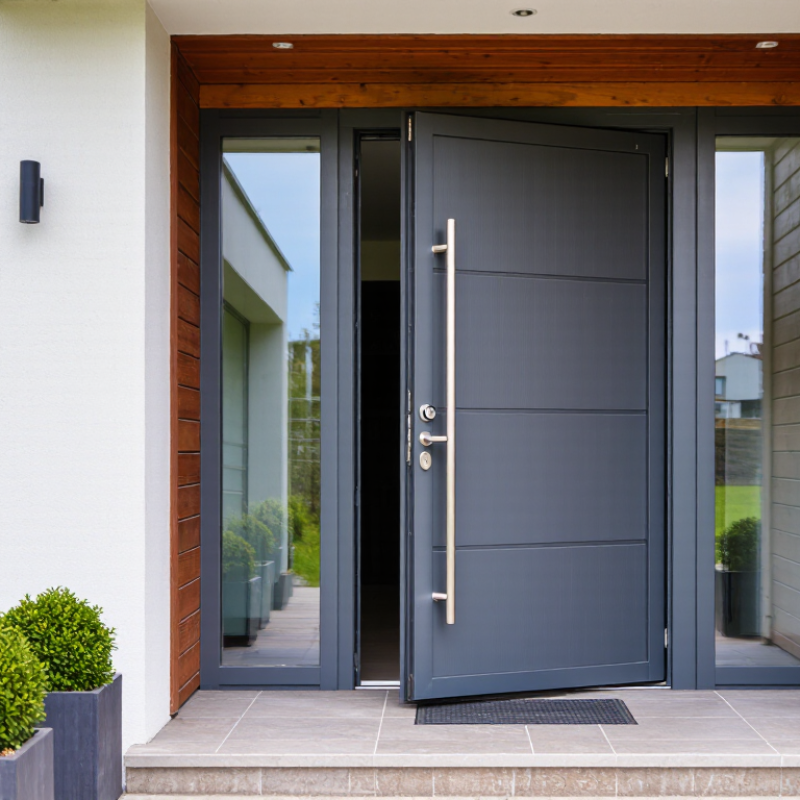
Why Choose an Aluminum Entry Door for Your Home?

Define Aluminum Entry Doors: Frames, Panels, Thermal Breaks, and Hardware

Why Choose an Aluminum Entry Door for Your Home?

An aluminum entry door is a system, not just a metal slab. Its frame supports the opening and carries hinges, locks, seals, and glass. The panel forms the visible barrier against weather and daily impacts. Aluminum resists corrosion and stays dimensionally stable, but it conducts heat quickly. That weakness matters.

Thermal breaks interrupt the metal path between indoor and outdoor surfaces. They usually use a low-conductivity polyamide strip inside the frame. This design reduces heat transfer and limits interior condensation.

The U.S. Department of Energy estimates that windows can cause 25–30% of household heating and cooling energy use.

A well-designed door cannot solve every energy problem, but its frame still deserves attention.

Hardware completes the system. Multi-point locks compress weather seals more evenly than a single latch. Adjustable hinges help maintain alignment after seasonal movement or heavy use.

Look for tested U-factor, air-leakage, and water-penetration ratings under NFRC or applicable industry procedures. ENERGY STAR Version 7.0 also emphasizes certified performance for residential doors and fenestration products.

Installation remains the uncomfortable variable. Even a strong thermal break performs poorly when the threshold is uneven or the perimeter seal is rushed. Bigger glass is attractive, yet it can increase heat gain and maintenance. Scratches happen.

Compare NFRC Ratings: U-Factor, SHGC, Air Leakage, and Condensation

An aluminum entry door can offer strength, slim sightlines, and dependable weather protection. Its performance, however, depends on more than appearance. The NFRC label provides useful evidence for comparing models before installation.

U-factor measures heat transfer through the door. Lower numbers usually mean better insulation. In a cold climate, a low U-factor can help keep the interior surface warmer. SHGC measures how much solar heat enters through glazed areas. A higher SHGC may benefit a shaded, cool home, but it can overheat a sunny hallway.

Air leakage is equally practical. A low air-leakage rating suggests fewer drafts around the door assembly. Look closely at weatherstripping, threshold adjustment, and the frame-to-wall seal. Even an excellent laboratory rating cannot correct poor installation.

Condensation deserves attention. Warm indoor air may meet a cold aluminum surface and form moisture, especially near glass edges or hardware. Thermal breaks can reduce this risk, but they do not remove it. Indoor humidity, exterior shade, and ventilation also matter.

I have seen homeowners focus only on U-factor. That can be misleading. A door with strong insulation may still feel uncomfortable if air bypasses the frame. Ask for NFRC values, installation details, and condensation information together. I sometimes wish these labels explained real-world exposure better, because a sheltered entrance and a wind-facing entrance rarely perform the same way.

Why Choose an Aluminum Entry Door for Your Home?

Compare NFRC-related performance indicators: U-Factor, SHGC, Air Leakage, and Condensation Resistance.

The chart uses a directional performance index, where a higher score indicates better thermal or air-tightness performance. U-Factor, SHGC, and Air Leakage are better when lower, while Condensation Resistance is better when higher. Actual reference values are shown in the tooltips.

Representative reference values: U-Factor is measured in Btu/h·ft²·°F, SHGC is unitless, Air Leakage is measured in cfm/ft² at 1.57 psf, and Condensation Resistance uses the NFRC 0–100 scale. Ratings vary by door design, glazing, size, and test configuration.

Check ENERGY STAR Door Criteria and DOE Climate-Zone Requirements

Why Choose an Aluminum Entry Door for Your Home?

An aluminum entry door can look clean, resist rot, and handle frequent use. However, metal conducts heat quickly without a thermal break. Look for insulated frames, sealed joints, and low-emissivity glass when glazing is included. On a cold morning, a poorly insulated frame may feel chilly around the edges.

ENERGY STAR criteria deserve careful attention. Check the product’s current certification label and NFRC performance data. Focus on U-factor, solar heat gain coefficient, and air leakage ratings. A lower U-factor generally means better insulation. SHGC matters more where strong sunlight increases indoor cooling demand. The right balance depends on your location, window area, and entryway exposure. Certification rules can change, so confirm the latest requirements before ordering.

DOE climate zones add another layer. Heating-dominated zones usually demand stronger resistance to heat loss. Hotter zones may require tighter air control and a suitable SHGC. Mixed climates need a compromise, especially on a west-facing entrance. Ask the installer how the door meets your zone’s insulation expectations, not just whether it looks energy efficient. Check the threshold, weatherstripping, and wall connection. Small gaps can undermine good laboratory ratings. I would also measure the rough opening twice; an attractive door cannot correct an inaccurate installation. Mistakes happen. The label is only part of the evidence.

Assess Aluminum’s 75% Recycled-Content Potential and Life-Cycle Value

An aluminum entry door can offer more than a clean architectural appearance. Its sustainability depends heavily on recycled content, manufacturing energy, service life, and recovery after removal. The often-quoted 75% figure deserves careful scrutiny. It should describe a verified product target, not an automatic industry average.

The International Aluminium Institute reports that recycling aluminum uses about 5% of the energy required for primary production. That represents roughly 95% energy savings during remelting. However, recycled content still depends on available scrap, alloy separation, and local production systems. A product-specific Environmental Product Declaration can reveal whether the claimed percentage is real and independently assessed. Numbers matter.

A well-designed aluminum door may remain stable through repeated temperature changes, rain, and daily use. Thermal breaks can also reduce conductive heat loss around the frame. Yet recycled content alone does not guarantee a lower life-cycle impact. Poor installation can create drafts, while damaged finishes may shorten service life. The European Aluminium circularity research emphasizes keeping aluminum in use and recovering it efficiently at end of life. Homeowners should therefore ask about recycled input, coating durability, repair options, and take-back pathways. The 75% goal is promising, but it requires verification, not optimism.

Verify AAMA 2605 Finishes, Security Testing, and Maintenance Needs

Why Choose an Aluminum Entry Door for Your Home?

An aluminum entry door offers a clean appearance, stable performance, and practical resistance to moisture. However, the finish deserves careful attention. Ask whether the coating complies with AAMA 2605 requirements, not merely whether it looks premium. This specification addresses color retention, chalk resistance, gloss retention, and film durability under demanding exposure. Request test reports, warranty terms, and the approved color range. A beautiful sample is not proof. I have seen dark finishes fade faster on sun-facing entrances, especially when maintenance was neglected.

Security depends on the complete door system. Check testing for the slab, frame, hinges, lockset, glazing, and installation method. A strong panel cannot compensate for weak fastening or poor alignment. Ask whether the assembly has undergone forced-entry, impact, or cycle testing relevant to your location. Confirm the test scope in writing. Some sales descriptions sound reassuring but reveal little technical detail. That deserves a second look.

Tips:

Clean the frame with mild soap and water twice yearly. Remove grit from hinges and thresholds. Inspect seals for cracking, and tighten loose hardware carefully. Avoid abrasive pads and harsh solvents, which can damage the coating. Keep the drainage paths clear. A small inspection now can prevent an expensive adjustment later. Also, record the finish color and maintenance products used. This detail helps if a repair becomes necessary.

FAQS

Why choose an aluminum entry door?

Aluminum resists rot, looks clean, and handles frequent daily use. Its frame needs thermal breaks because metal conducts heat quickly. Without them, the edges may feel cold on winter mornings.

What insulation features should an aluminum door have?

Look for an insulated frame, sealed joints, thermal breaks, and durable weatherstripping. Check the threshold and wall connection carefully. Small gaps matter.

Which performance ratings should homeowners compare?

Review the current certification label and independent performance data. Focus on U-factor, solar heat gain coefficient, and air leakage. A lower U-factor generally indicates better insulation.

How does climate affect door selection?

Cold regions usually need stronger resistance to heat loss. Hot regions may need tighter air control and a suitable solar heat gain coefficient. Mixed climates require compromise, especially on west-facing entrances.

Can a good laboratory rating guarantee real performance?

No. Installation quality can change the result significantly. An inaccurate rough opening, loose threshold, or damaged seal can create drafts. Measure twice.

Is 75% recycled aluminum content guaranteed?

No. That figure should describe a verified product target, not an automatic industry average. Ask for product-specific documentation and independent assessment. Numbers need proof.

Why does recycled aluminum support sustainability?

Remelting recycled aluminum may use roughly 5% of the energy required for primary production. That represents about 95% energy savings during remelting. Local scrap systems still matter.

What affects an aluminum door’s life-cycle value?

Consider recycled input, manufacturing energy, coating durability, repair options, service life, and end-of-life recovery. Recycled content alone cannot prove lower impact. The full picture is complicated.

How can homeowners improve long-term door performance?

Choose durable finishes and maintain weatherstripping. Ask about repairs and recovery pathways after removal. Inspect the frame after heavy rain or major temperature changes. Some details are easy to overlook.

Conclusion

An Aluminum Entry Door can offer a practical balance of durability, energy performance, security, and design flexibility. Its construction typically includes an aluminum frame, insulated panels, thermal breaks, weather seals, and dependable hardware. When comparing options, review NFRC ratings such as U-factor, solar heat gain coefficient, air leakage, and condensation resistance to understand how the door may perform in your climate. Energy efficiency should also be evaluated against ENERGY STAR criteria and applicable DOE climate-zone requirements.

Aluminum is naturally resistant to rust and can support long service life with relatively limited upkeep. Some products may incorporate substantial recycled content, potentially reaching about 75%, which can improve life-cycle value when durability and recyclability are considered. For lasting appearance, verify that the finish meets AAMA 2605 performance expectations, and confirm that the unit has undergone appropriate security and operational testing. Regular cleaning, seal inspection, and hardware adjustments can help preserve performance over time.

Isabella

Isabella

Isabella is a dedicated marketing professional with a sharp focus on driving brand growth and engagement through strategic content creation. With an extensive background in digital marketing, she combines her passion for storytelling with her keen understanding of industry trends to deliver......